
Janine Lange: Part 1 -An Author’s Voice and a Journey to Italy
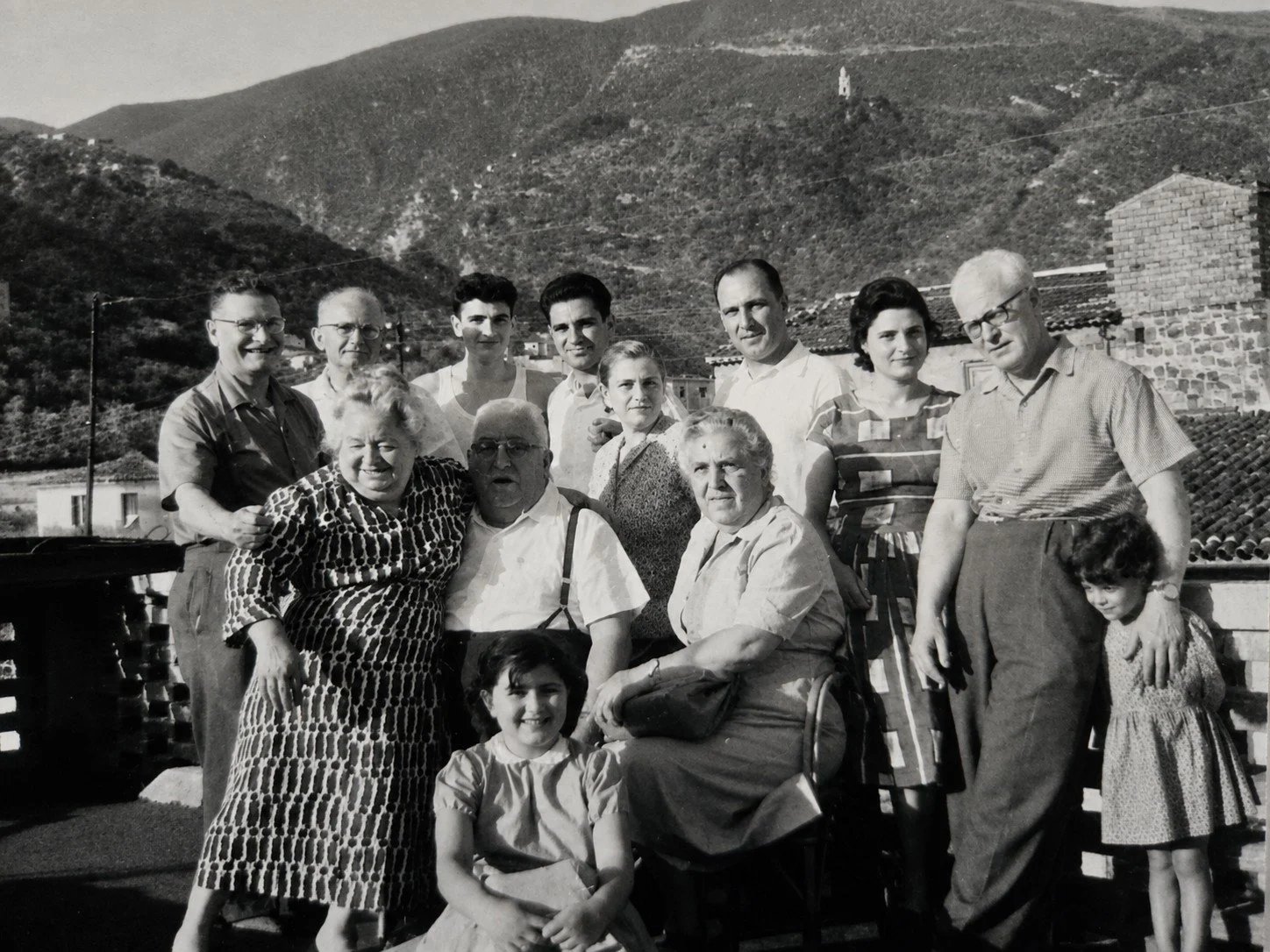
There is a photograph Janine Lange has returned to again and again.
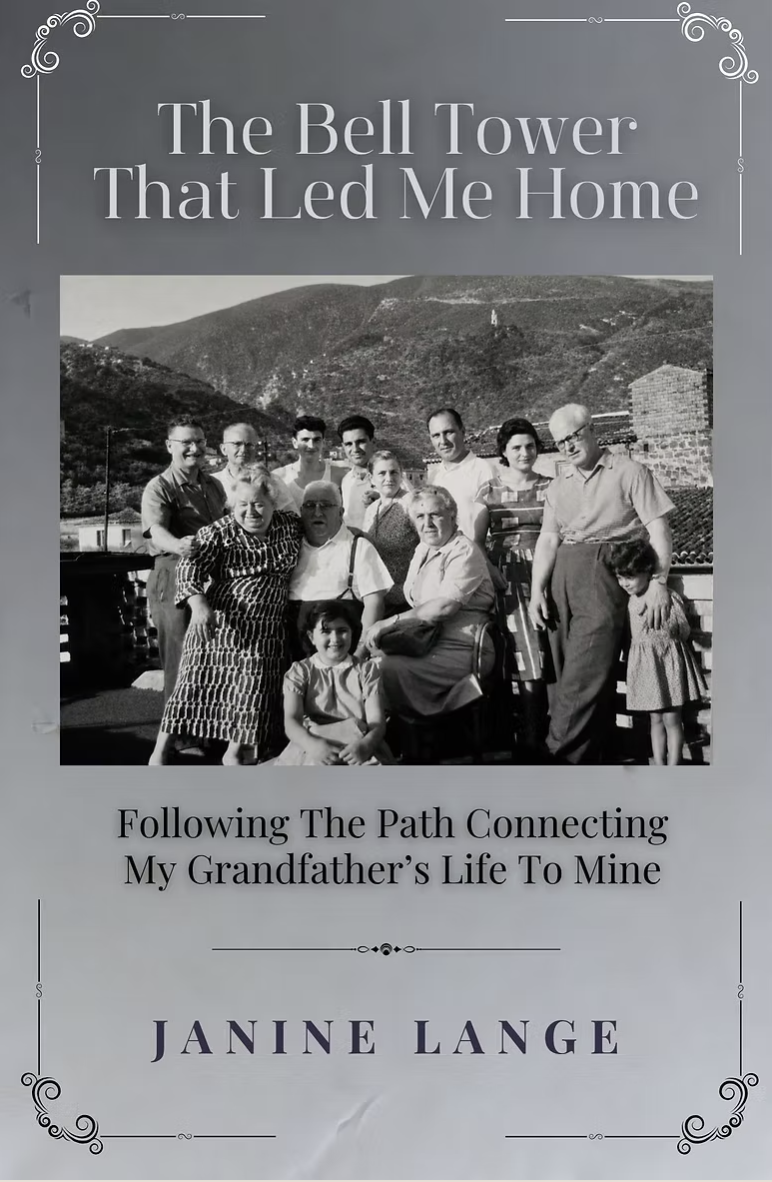
Taken in Italy in 1957, it shows a group of relatives gathered on a balcony with a mountain rising behind them. Janine recognizes her grandfather and knows the woman beside him was his sister. The other faces, the exact location and the story held inside the frame were once a mystery.
Janine calls it “the balcony picture.”
When Janine told me about listening to her grandfather’s stories, I thought of my own family. My mother is fully Italian, and my great-grandparents came from Italy to America in their early teens. When I was little, my grandparents and great-grandparents all lived on the same corner block in Lebanon, Illinois. I moved between their houses, sometimes spending the night, often waiting in a kitchen while someone got ready for the day or cooked a meal. In those ordinary stretches of time, they told me about my great-grandparents’ lives in Italy and the siblings they had known there. My grandmother told me how she and my grandfather met and courted. I can still picture my great-grandmother making homemade pasta, my grandmother at the stove, and the meals we shared around their tables.
Those memories came back as Janine talked. I recognized the gift of growing up close enough to older generations to hear their stories in their own voices—and the wish, years later, that I had asked them even more.
For Janine, the balcony picture quietly asked a question: Who were these people, and what part of her own story had been left behind with them? Now, more than half a century after the photograph was taken, Janine is preparing to stand on that balcony herself. She and her daughter will travel to Italy, meet relatives they only recently discovered and recreate the image that helped lead them there.
The trip may look like a return to the past, but Janine’s story has never been about looking backward for nostalgia’s sake. It is about understanding what we carry forward—our family’s strength, sacrifices, traditions and stories—and what can be lost when no one takes the time to preserve them. For Janine, that work began with her grandfather.
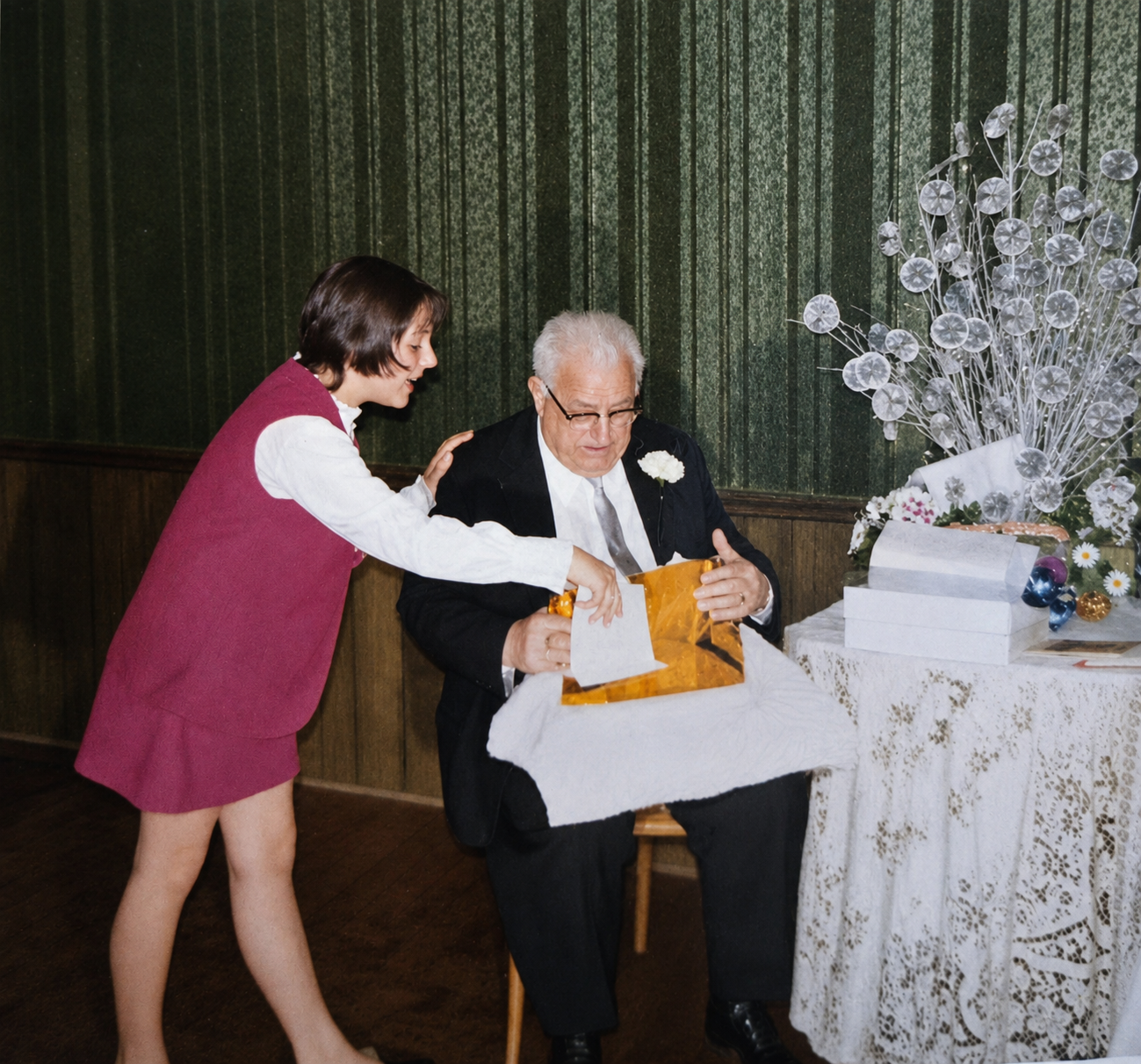
The man who held the family together
Janine grew up in a small Cape Cod home in New Jersey, but on Sundays it seemed large enough to hold an entire family.
Her mother was the youngest of 10 children, and Janine was the youngest grandchild. Her grandmother had died, so her grandfather lived with Janine’s family. Each Sunday, her aunts, uncles and some of her 32 first cousins crowded into the house to eat, reminisce and tell stories around the kitchen table.
While the other children played outside, Janine often remained close enough to listen.
Her grandfather, Raffaele Confredo—Ralph to many in the United States—had immigrated from Piedimonte D’Alife in southern Italy in 1905. The town is known today as Piedimonte Matese. Janine had grown up with his stories, but now wonders about the part he rarely told: what it felt like to leave home as a young boy. Was he frightened, excited, or both? He told her about his life, his family and the love story that brought him and Janine’s grandmother together. Because he lived with them, the stories did not reach Janine through a family tree or a collection of dates. She heard them from the man who had lived them.
Their bond was immediate. Janine’s mother kept a home movie of her grandfather seeing Janine after she came home from the hospital, tears filling his blue eyes.
They planted his garden, strung beans and grated fresh cheese together. On New Year’s Eve, while her parents went out, Janine stayed up with him cooking sausage and roasting chestnuts. When family members gathered to play cards, he saved the change so the two of them could roll the coins together. He was also her most constant source of affection.
“He was a hugger,” she remembers.
Janine’s parents belonged to a stricter, less demonstrative generation. Her grandfather held her hand, pulled her close and let her fall asleep on his lap during car rides home from visiting relatives. His beard scratched her face when he hugged her, and she loved it. When he passed shortly after Janine began high school, she lost far more than a grandfather. She lost the person who had made her feel safest and the center around which her extended family revolved.
“All the noise stopped,” she says.
The Sunday gatherings faded. She saw her cousins less often. The man who had held everyone together was gone
Building a family of her own
Janine did what she had instinctively done since childhood: she wrote. She wrote about missing him, just as she had once written about rainy days, movies and changing leaves. At the time, she did not think of writing as a career. It was simply an extension of who she was and a place to put what she could not bear to lose. Janine says she loved writing from a young age. The impulse began long before she had a profession to attach to it. Her grandfather gave her stories to carry, and writing gave her a way to keep him close after he was gone.
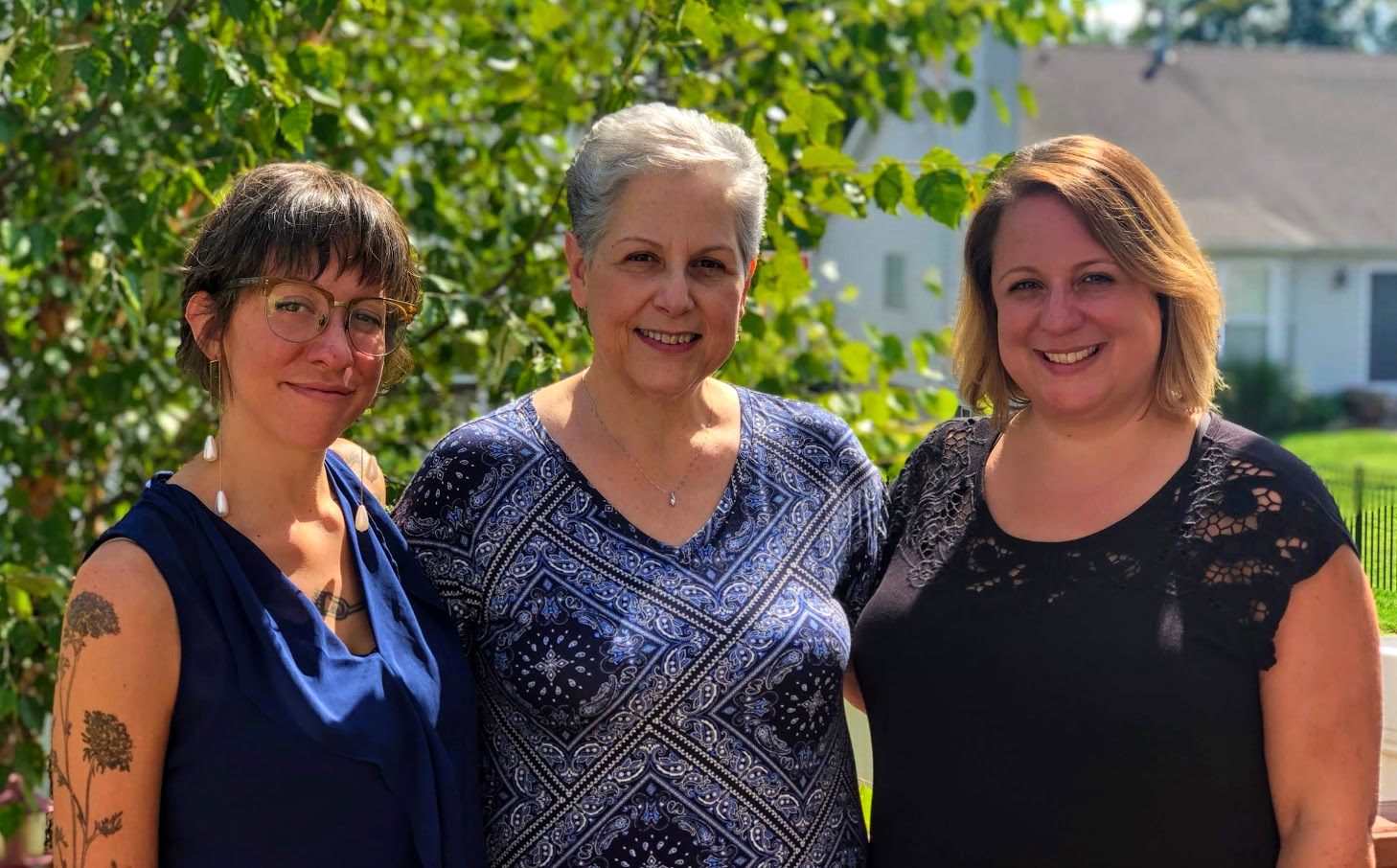
Janine married at 19 and became the mother of three daughters. The lessons she had absorbed around that crowded kitchen table shaped the home she wanted to create.
“There’s nothing more important than family,” she told her husband. She wanted to be the one raising their children, even if staying home required sacrifice and creativity.
She sewed clothing, curtains and prom dresses. She baked cookies and homemade bread for school lunches. When money was tight at Christmas, she found ways to make the tree look full and the day feel abundant. Her daughters remember the traditions, not the limitations.
One of those traditions began the year Janine’s youngest daughter was born on Christmas Day. Already in labor, Janine worried that her two older girls would not have a special breakfast, so she made cinnamon bread before leaving to have the baby. The following Christmas, one daughter asked whether she would be making “Sharon bread” again. A frantic, practical act of love became the family’s annual Christmas bread. It is a small example of what Janine has come to understand about family history: traditions are often born before anyone realizes they are creating one.
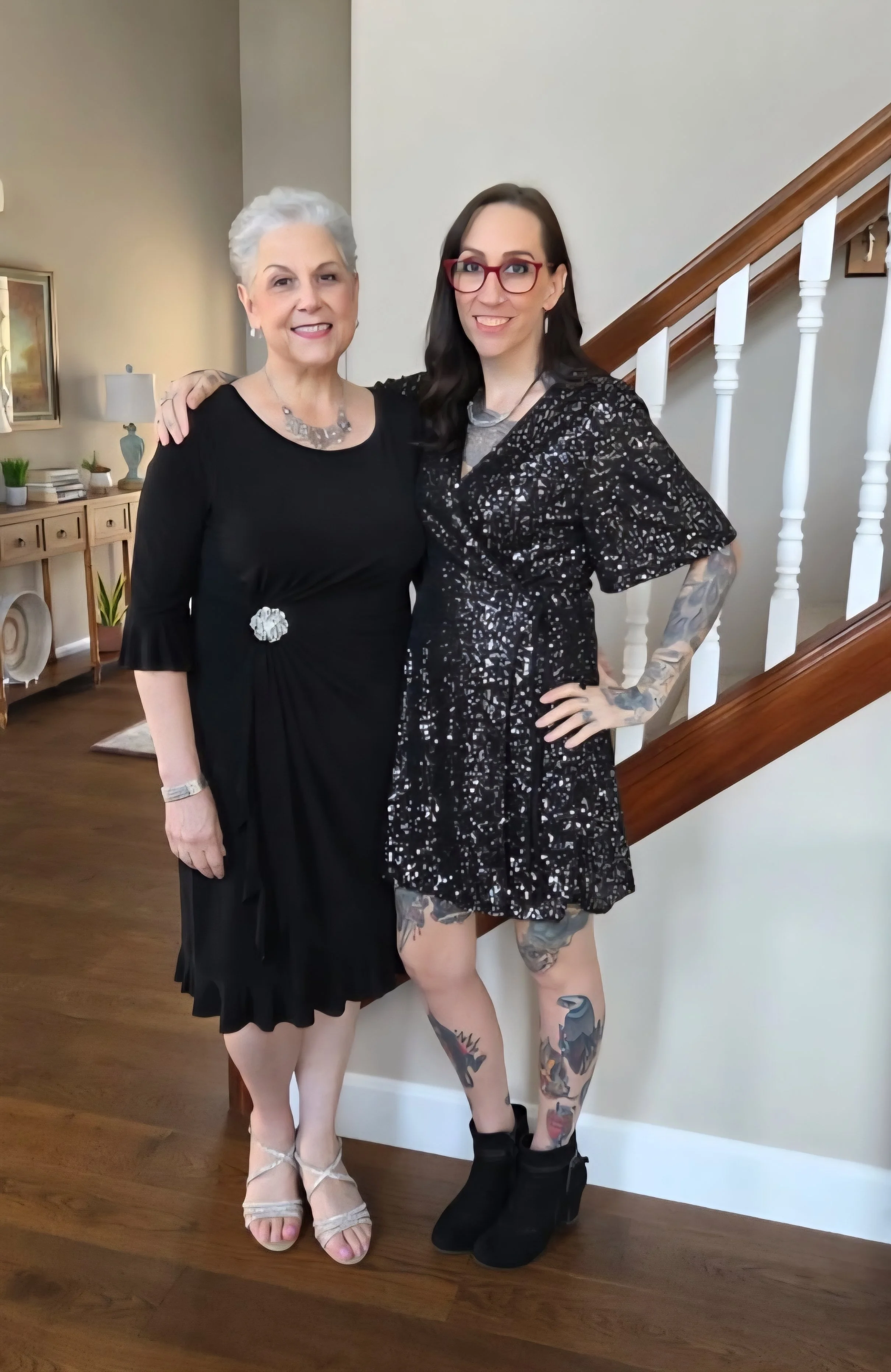
Her three daughters are grown now, part of the older-millennial generation. Janine speaks with pride about the different paths they have taken: Jennifer works in advertising leadership, Melissa is a writer, and Sharon is a teacher in Vermont. The girls who grew up with homemade bread and handmade dresses have built lives of their own, carrying pieces of the home Janine made for them.
A new beginning at 45
Once her daughters were older and in college, Janine began searching for meaningful work. She answered a newspaper advertisement for a respite worker with a hospice organization. The position involved staying with patients so their families could work, shop or simply step away for a short time.
The word that caught Janine’s attention was family.
She became particularly close to one woman whose condition continued to decline. When Janine realized the woman needed more physical care than she was trained to provide, she earned her certification as a nursing assistant. She remained with the family for more than a year, until the woman passed. Afterward, the woman’s daughter told Janine that she would make a wonderful nurse.
Janine took it as a sign. She had been away from school for 25 years. At 45, she completed her prerequisites and applied to a highly competitive nursing program. Out of 195 applicants, only 32 would be admitted. Janine took the nursing entrance exam and earned a 94. Still worried that it was not high enough, she took it again and earned a 96. She began nursing school at Northwest College in Powell, Wyoming, in August 2005, entering the program as its oldest student and one of its few nontraditional ones. Many classmates already had medical backgrounds as EMTs or surgical technicians. Janine arrived with her nursing-assistant experience, a deep sense of purpose and no intention of letting her age decide what she could do.
Then, just weeks into the program, she realized she could hear her instructor but could no longer see her clearly.
In October 2005, doctors discovered a brain tumor pressing against her optic nerve. As the tumor grew, her vision deteriorated. She needed surgery immediately.
Janine’s response captured the resolve that had already carried her into the classroom: “I’m in nursing school. I don’t have time for a brain tumor.”
She asked to finish her final exams before surgery. By then, light caused severe pain and her sight was nearly gone. One instructor sat with her in a dark closet, shining a flashlight on the questions and reading them aloud so Janine could answer. She completed her finals and went directly from school to the hospital. The tumor was removed in December 2005.
Learning healthcare from the other side
The surgery removed the tumor, but Janine’s medical crisis was far from over. Shortly afterward, she awoke in the middle of the night with crushing pain. Blood clots had traveled to her lungs, a life-threatening complication following surgery. She spent another week in intensive care and another week in the hospital. Removing the tumor had also affected her pituitary function. Her body could no longer regulate essential hormones normally. She entered immediate menopause, developed thyroid complications, struggled to regulate her temperature and lost the hormonal response that helps the body manage stress.
She returned to nursing school with almost no stamina and only days to prepare for clinical work. The director of nursing urged her to quit, concerned that Janine’s fragile health made her a liability. Janine refused.
“I am 46 years old,” she told her. “This is my last shot.”
They reached an agreement: Janine could begin with less physically demanding clinical assignments while rebuilding her strength. Even then, her body sometimes betrayed her. During one surgical observation, she began to overheat beneath her protective clothing and felt close to passing out. Her fellow nursing students helped her out of the room and onto the cold floor, where she could lie down and recover.
Their care did not end there. They recorded lectures, brought meals and helped clean her house while she regained her strength. Janine was determined to finish nursing school, and the women beside her were determined to help her get there. A surgeon who learned what she had experienced explained some of the lasting effects of her condition that no one else had prepared her to expect.
Those months taught Janine medicine from two perspectives at once.
As a patient in intensive care, she once found herself unable to reach the call button after the glass doors to her room were closed. She could not call loudly enough for anyone to hear her. The experience stayed with her long after she recovered. Later, while working in long-term care, she never left a patient without making certain the call button was within reach. She understood the fear created when medical professionals fail to explain what is happening. She understood how vulnerable it feels to need help and be unable to summon it. Those lessons became as important to her practice as anything she learned from a textbook.
When Janine graduated in May 2007, the nursing director who had once encouraged her to withdraw approached her.
“I’m so glad you didn’t listen to me,” she said. “You’re going to make a great nurse.”
Janine believed she would and perhaps would be a better one because she now knew what healthcare felt like from the other side of the bedrail. When I met Janine, her gentle, soft-spoken manner made it easy to imagine the comfort she offered at a patient’s bedside. The determination that kept her in school lived alongside that tenderness. She knew how much it mattered to be heard, reassured and cared for.
When nursing and writing found each other
Janine gravitated toward geriatrics, long-term care and hospice. Older adults had surrounded her throughout childhood, and caring for them felt natural. Over time, she became a director of nursing, a director of education and, after earning both bachelor’s and master’s degrees, a nursing instructor.
Writing followed her into every role.
She developed policy and procedure manuals, family-care resources and materials designed to help children feel less frightened around aging or seriously ill loved ones. Troubled by high employee turnover in long-term care, she created an orientation program focused on preparing and retaining staff. The organization she worked for adopted it throughout its long-term-care communities, and Janine was invited to present the program at a nursing conference in Kansas City.
So many people registered that organizers opened a second ballroom. After her presentation, a representative from a healthcare publishing company approached Janine and asked whether she had considered turning the program into a book.
Janine explained that it was not a book; it was simply an orientation program.
“We can make it a book,” the representative replied.
Her first book, Enhancing Staff Retention in Person-Centered Care Environments for Older Adults: How to Create and Implement a Comprehensive Orientation Program, was published by Health Professions Press in 2015. It earned second place in the Gerontologic Nursing category of the American Journal of Nursing’s 2016 Book of the Year Awards and a National Health Information Merit Award. The work was translated into eight languages and used by multiple long-term-care organizations. For Janine, it offered proof that nursing and writing did not have to compete for space in her life. One could give greater purpose to the other.
Even as Janine built her nursing career, cared for aging family members and managed multiple households, the desire to write fiction remained. She worked full time while caring for her 99-year-old father-in-law, overseeing her mother’s home and responsibilities, managing her own household and writing a novel. Eventually, she told her husband that something had to give.
Retirement was still two years away, but Janine had built her life by making deliberate sacrifices for what mattered most. She decided this would be no different. On April 9, 2026, she retired from nursing and began writing full time.
Her father-in-law died only a few months before his 100th birthday. Her mother, now in her 90s, remained fiercely committed to living independently. With fewer daily responsibilities, Janine finished her novel and found a publisher.
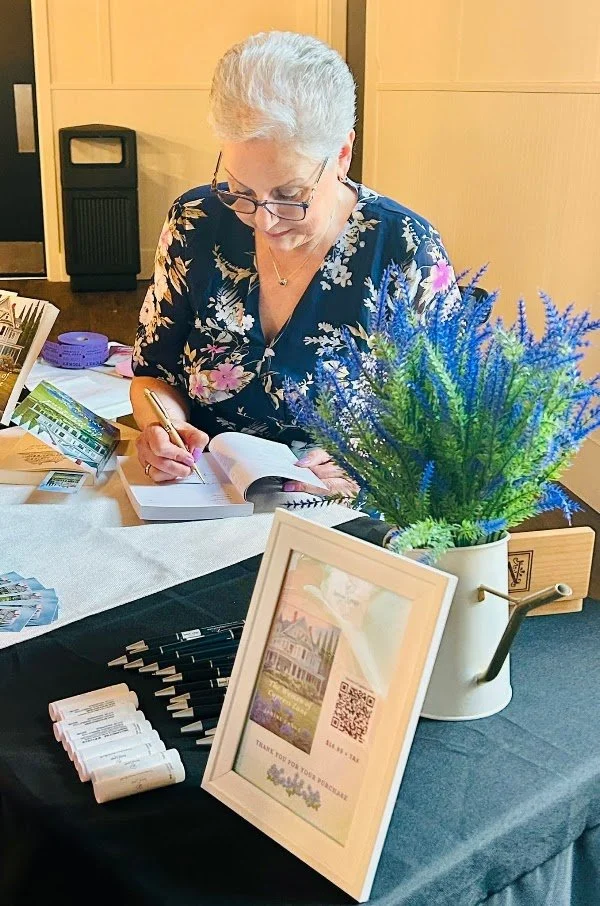
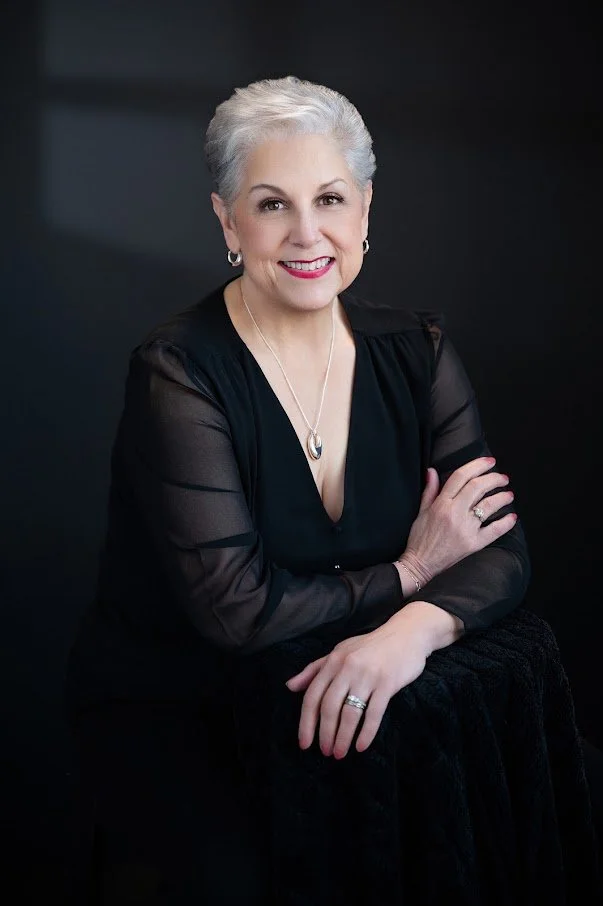
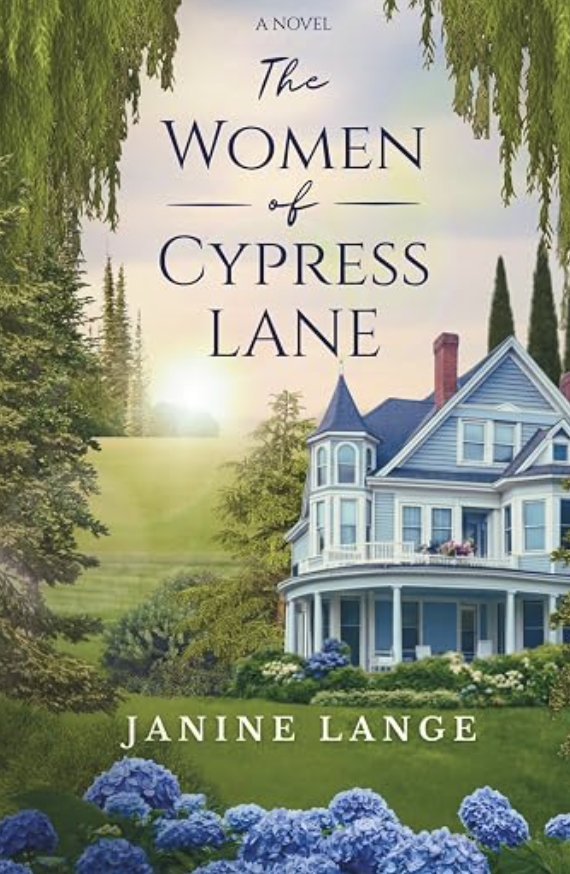
The Women of Cypress Lane, her first historical fiction novel, was published in May 2026. It sold more than 800 copies in its first three months. Janine continued writing. Still, claiming a new identity after decades in healthcare required intention. Janine wrote her name on a piece of paper and placed the word author beside it. She arranged professional photographs and business cards. She understood that if she wanted others to see her differently, she first had to see herself that way.
“If I can see it, I can be it,” she told herself.
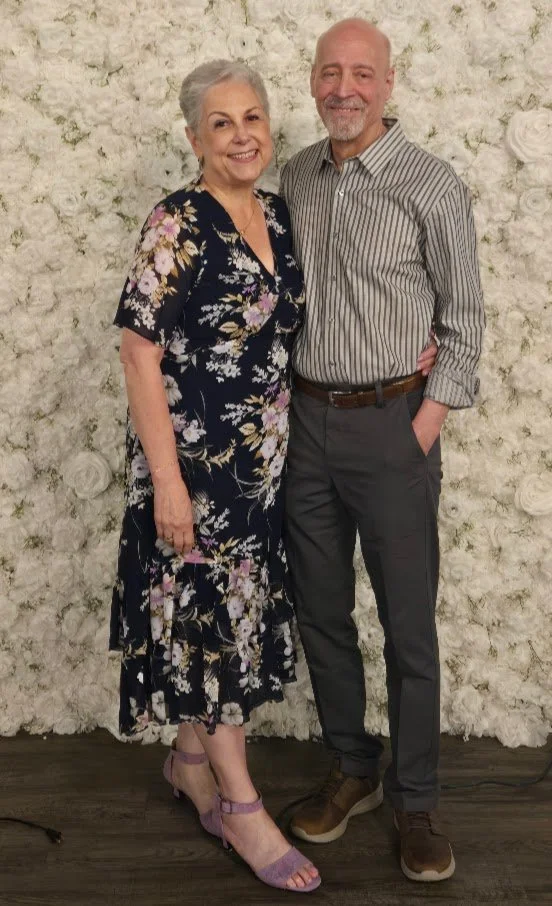
At 64, Janine entered a networking room and was asked to introduce herself. After decades as a mother, caregiver, nurse and teacher, she said her new title aloud: “I’m Janine Lange. I’m an author.”
The words felt true because she had finally allowed herself to own them. Looking back, she says she stopped comparing herself with others and recognized her determination, perseverance and talent. She had earned her seat at the table.
“If I’m gonna talk the talk, I have to walk the walk,” she had told herself. The photographs and business cards were small, visible steps toward claiming an identity that had been part of her since she was a girl.
Janine is one of the women in their 60’s who keep showing me how much can begin after a long career ends. Retirement from nursing gave her room to build something new from abilities she had been developing all her life. Her ingenuity was not a sudden discovery at 64. It was present in the mother who made a celebration with what she had, the nurse who found better ways to care for people, and the writer who finally gave herself permission to be seen.

Saying the word “author”
Even as Janine built her nursing career, cared for aging family members and managed multiple households, the desire to write fiction remained. She worked full time while caring for her 99-year-old father-in-law, overseeing her mother’s home and responsibilities, managing her own household and writing a novel. Eventually, she told her husband that something had to give.
Retirement was still two years away, but Janine had built her life by making deliberate sacrifices for what mattered most. She decided this would be no different. On April 9, 2026, she retired from nursing and began writing full time.
Her father-in-law died only a few months before his 100th birthday. Her mother, now in her 90s, remained fiercely committed to living independently. With fewer daily responsibilities, Janine finished her novel and found a publisher.
The Women of Cypress Lane, her first historical fiction novel, was published in May 2026. It sold more than 800 copies in its first three months. Janine continued writing. Still, claiming a new identity after decades in healthcare required intention. Janine wrote her name on a piece of paper and placed the word author beside it. She arranged professional photographs and business cards. She understood that if she wanted others to see her differently, she first had to see herself that way.
“If I can see it, I can be it,” she told herself.
At 64, Janine entered a networking room and was asked to introduce herself. After decades as a mother, caregiver, nurse and teacher, she said her new title aloud: “I’m Janine Lange. I’m an author.”
The words felt true because she had finally allowed herself to own them. Looking back, she says she stopped comparing herself with others and recognized her determination, perseverance and talent. She had earned her seat at the table.
“If I’m gonna talk the talk, I have to walk the walk,” she had told herself. The photographs and business cards were small, visible steps toward claiming an identity that had been part of her since she was a girl.
Janine is one of the women in their 60’s who keep showing me how much can begin after a long career ends. Retirement from nursing gave her room to build something new from abilities she had been developing all her life. Her ingenuity was not a sudden discovery at 64. It was present in the mother who made a celebration with what she had, the nurse who found better ways to care for people, and the writer who finally gave herself permission to be seen.
Finding the people in the picture
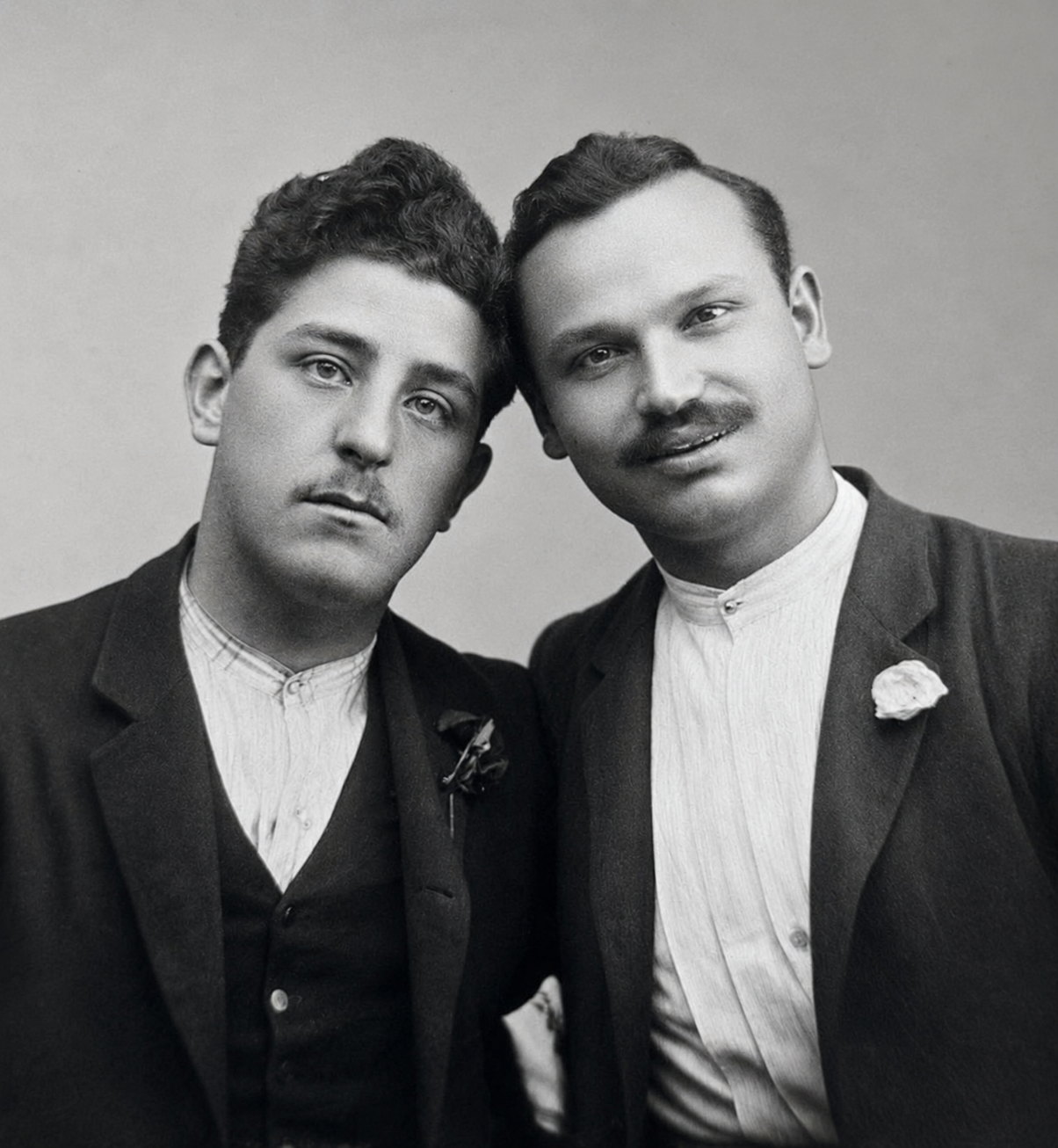
Janine never stopped thinking about her grandfather’s story. While looking through her mother’s old albums, the balcony photograph caught her attention again. She had her grandfather’s birth certificate and knew he came from Piedimonte D’Alife, in the Campania region of southern Italy. In 1970, the town was renamed Piedimonte Matese. Using online videos, she matched the mountain and the town’s bell tower to the background in the photograph. Then she posted the 1957 image in a Facebook group and asked whether anyone recognized the place or the people. Responses began arriving. One person recognized a local grocer. Another identified a family connection. Eventually, Janine received the message she had hoped for: “Yes, that’s me.”
The man in the photograph was her second cousin. His grandfather and Janine’s grandfather were brothers.
He was 87 and still online. Janine began communicating with him and his daughter, who helped connect her with more relatives.
As responses to her Facebook post arrived and those family connections grew, Janine felt compelled to travel to Piedimonte, retrace her grandfather’s steps and see his hometown for herself. She began planning a trip, and her relatives began arranging a family reunion for her arrival.
Then the coincidences kept coming. The bed-and-breakfast where Janine planned to stay carried a name that translated to “my grandfather’s house.” The local photographer she found had recently completed an exhibition honoring his own grandfather, also a photographer who had documented the town. When Janine connected online with an Italian author and teacher whose work explored women’s resilience and family history, she learned that the woman taught the daughter of the man she rented the house from. Each connection seemed to lead naturally to another.
The photographer will spend a day documenting Janine’s visit—the mountain, the bell tower, the relatives and the balcony. Janine and her daughter hope to sit where their family once sat and recreate the photograph that began it all.
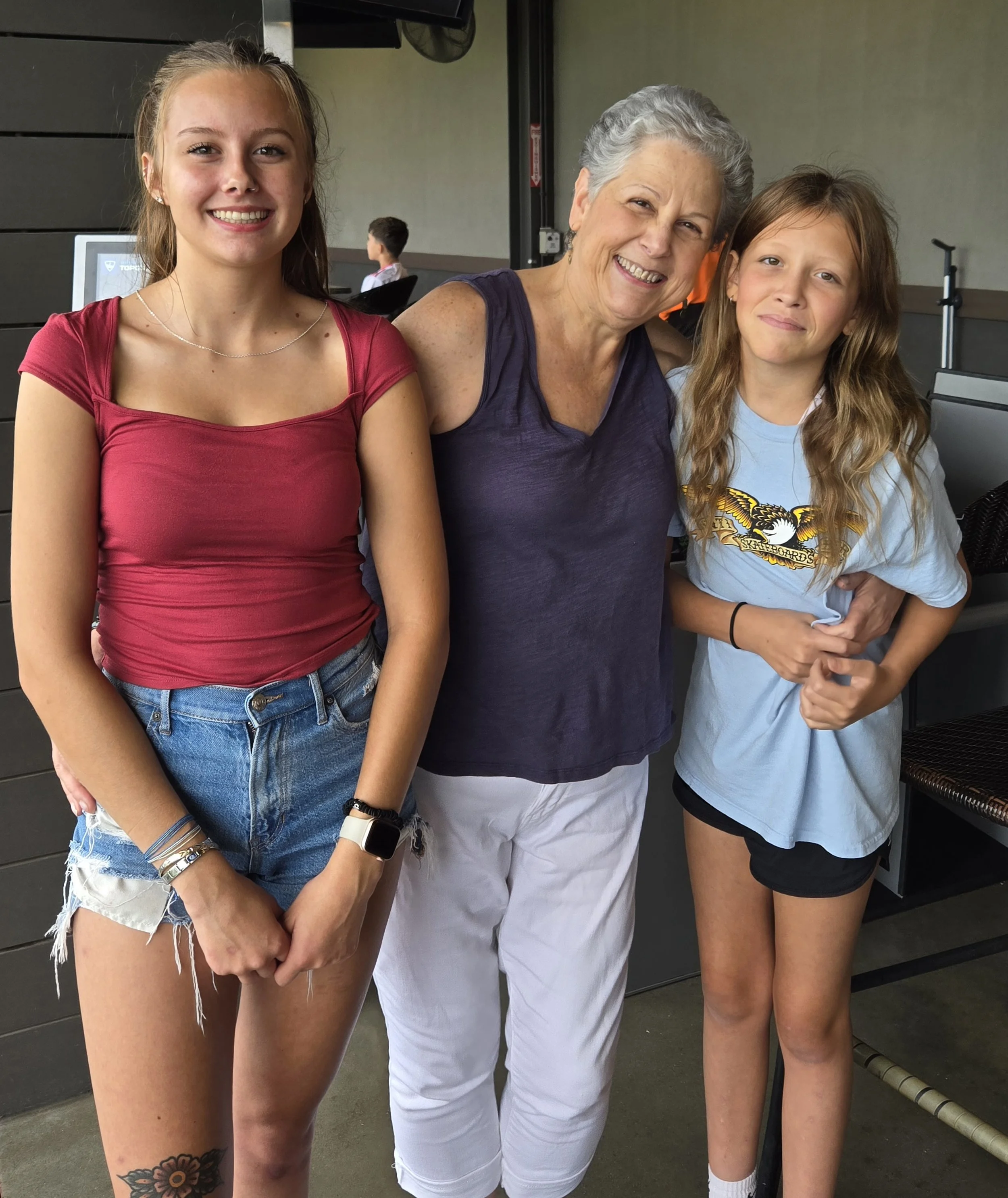
Janine lit up when she spoke about going to Italy. She wants to see the place her grandfather called home and meet the relatives whose lives continued there after he left. She also looks forward to coming home with stories she can share with her daughters and granddaughters, stories they can tell again, keeping their family’s history alive in their own voices.
Writing the family forward
Janine does not want this project to become a genealogy lesson built only from names, dates and records. She is more interested in the meaning underneath them.
Why does knowing our history matter? What can the women who came before us teach us about our own capacity? How might a young woman understand herself differently if she knew the resilience already present in her bloodline?
Janine sees that question becoming especially important for her granddaughters.
One recently began college and places enormous pressure on herself. Janine wants her to understand that she comes from generations of women who endured upheaval and kept moving: Janine’s grandmother, sent alone to the United States at 18 because her parents disapproved of the young man she was seeing; her mother, who left school to care for sick relatives; Janine herself, who entered nursing school at 45 and returned after a brain tumor and pulmonary emboli; and Janine’s daughter, who is living with a debilitating illness while building a writing career of her own to help others navigate the healthcare system when no one will listen to them.
These are not simply stories about hardship. They are evidence. They tell the next generation: You come from women who found a way.
Janine has adopted a guiding phrase from Lee Iacocca that reflects the same determination: “Lead, follow, or get out of my way.”
She has stepped fully from one profession into another. She has published a healthcare training book and her first historical novel, continues to build an audience and is turning a family mystery into a story that may encourage others to pay closer attention to their own histories.
Soon, she will travel the road her grandfather once traveled in the opposite direction. She will meet the family members whose names were nearly lost, look out at the mountain from the photograph and take her place on the balcony.
The new picture will not duplicate the first one. Too many years and lives stand between them for that.
Instead, it will show what became possible because one granddaughter listened at the kitchen table, remembered the stories and refused to let them disappear.
What She Would Tell Her Younger Self and What Comes Next
If she could speak to the younger version of herself—the mother, student, patient and nurse still finding her way—Janine would tell her to enjoy the process and trust her own ability without worrying so much about the outcome. Life did not always follow the route she planned. It sometimes led her somewhere better.
This is only part one of Janine’s story. As this story is published she is traveling to Italy with her daughter, following the threads of her grandfather’s life and meeting the family connected to that photograph. It is a journey that brings together what matters deeply to her: her family, the stories they share and her love of writing. When Janine returns, I look forward to sitting down with her again to hear what she discovered and what it felt like to finally stand in the place she had spent so long imagining. Stay tuned for part two…
Learn more about Janine Lange’s work: https://www.janinelange.com/
Follow on Facebook
