
If You Rest, You Rust: Why Mobility Matters for Women Over 40
Sometimes, We Meet the Business Before We Meet the Woman
At GlowInto, I love telling the stories of women—the turning points, experiences and choices that have shaped who they are today. But sometimes, the best introduction to a woman begins with the work she has built.
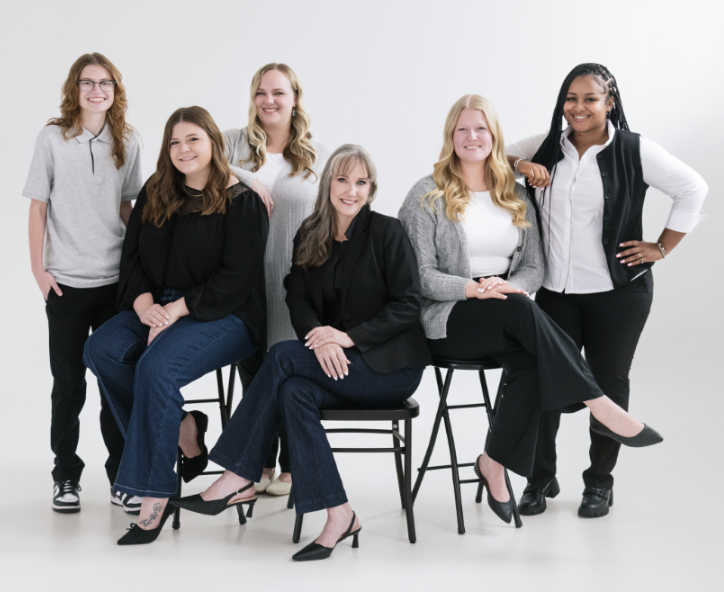
That’s where we’re starting with Dr. Gail Meese of Advantage Family Chiropractic.
As we continue our Longevity conversations this month, we’re taking a closer look at Dr. Gail’s business, her approach to helping people move and feel better, and why strength, mobility and caring for our bodies become even more important as we move through our 40s, 50s and beyond.
And this is only the beginning. We’ll come back to Dr. Gail later to tell the story of the woman behind the business—because at GlowInto, there is always more to the story.
Do you have a business you’d love to see featured on GlowInto? I’d love to hear from you. Email me at JenniferJoyner@GlowInto.com to talk about how GlowInto can help bring visibility to your business while also sharing the story behind the woman who built it.
Inside Advantage Family Chiropractic with Dr. Gail Meese
For women over 40, staying strong and mobile usually takes more than one approach.
Strength training helps build and preserve muscle, bone density, balance, and physical resilience.
Mobility work helps maintain usable range of motion so we can continue bending, reaching, walking, lifting, and moving comfortably.
Physical therapy can be especially important when someone is recovering from an injury, surgery, weakness, or a specific movement limitation.
And chiropractic care can play another role by addressing musculoskeletal pain, joint function, and movement restrictions that may make it harder to stay active in the first place.
These areas can overlap, but they are not interchangeable. Together, they point toward a much bigger goal: keeping women moving, strong, and independent as they age.
That is where Dr. Gail Meese of Advantage Family Chiropractic enters the conversation.
“If you rest, you will rust,” she says.
It is a simple phrase, but it reflects how Dr. Gailapproaches longevity. Her goal is not simply helping someone get out of pain. It is helping patients preserve movement, activity, and quality of life for the years ahead.
Looking Beyond the Pain
Many people first walk through the doors at Advantage Family Chiropractic because something hurts. Maybe it is their back, neck, hip, shoulder, or another problem that has begun interfering with everyday life.
But Dr. Gail says pain is often only part of the story.
“Chiropractic looks at the body differently than other healthcare professions,” she explains. “We look for the why.”
One of the first questions she asks a new patient is how the problem happened. Often, the answer is, “I don’t know.”
Symptoms do not always appear when a problem begins. The body may compensate for an underlying issue long before pain becomes noticeable enough to interrupt daily life.
And while pain can improve relatively quickly, that does not necessarily mean the underlying issue has been resolved.
That distinction shapes the three phases of care at Advantage: pain relief, stabilization, and prevention or maintenance.
Prevention, Dr. Gail believes, deserves more attention.
We brush our teeth to prevent cavities. We exercise and make nutrition choices to protect our health. We change the oil in our cars before the engine fails.
Our bodies require maintenance, too.
“Everything has to be maintained,” Dr. Gail says. “Our spinal health and musculoskeletal system are no different.”
The Mobility Conversation Women Over 40 Need to Have
For women in midlife, maintaining movement becomes increasingly important.
As life changes, routines often change with it. Children grow up. Jobs may involve more sitting. Activity levels shift. Over time, less movement can mean less flexibility and mobility.
Unlike the visible signs of aging we see in the mirror, we do not get to watch those changes happening inside our joints and musculoskeletal system.
Dr. Gail puts it into perspective this way: we often pay close attention to what aging is doing to our faces, but we might care for our musculoskeletal system very differently if we could see those changes taking place.
Her message is not about fighting aging. It is about protecting our ability to participate in our own lives.
A loss of flexibility can lead to a loss of mobility, and decreased mobility can contribute to degenerative changes over time.
By the time symptoms appear, some degeneration may already be present.
Chiropractic care cannot reverse degeneration that has already occurred, Dr. Gail explains, but treatment may help restore mobility and support better function.
For women who want to travel, exercise, play with grandchildren, work, garden, walk, hike, pursue hobbies, or simply maintain independence, that makes mobility much bigger than a conversation about a sore back.
It becomes part of longevity.
More Than Traditional Chiropractic Care
Another misconception Dr. Gail frequently encounters is that chiropractic care begins and ends with spinal adjustments.
Advantage Family Chiropractic offers several additional therapies designed to address different types of pain, mobility issues, and recovery needs.
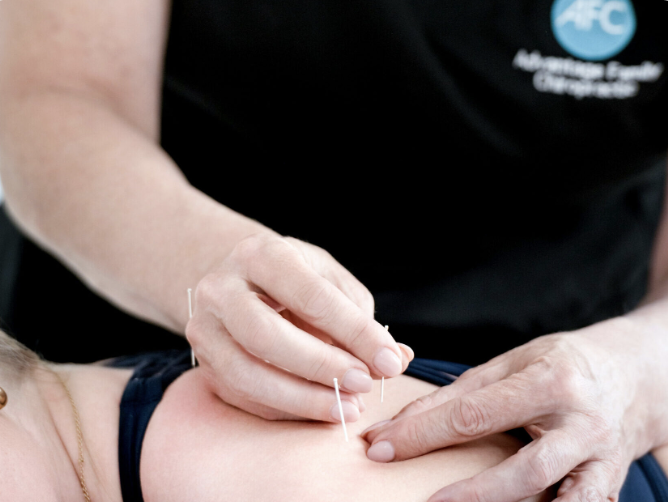
Dry needling may be used to target tight muscles and trigger points and help improve tension, mobility, and discomfort.
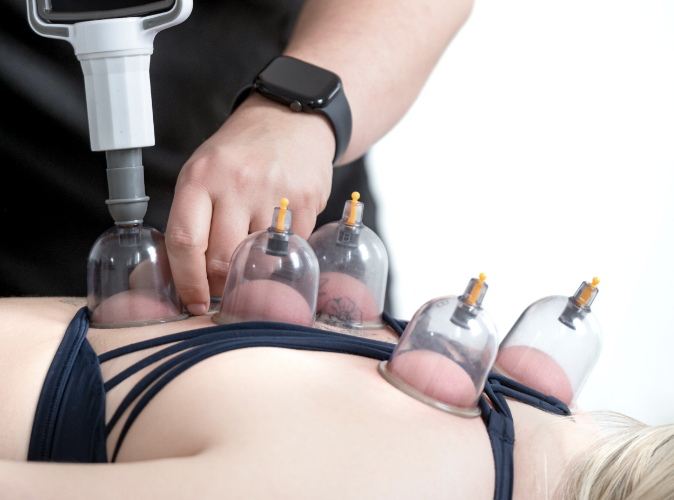
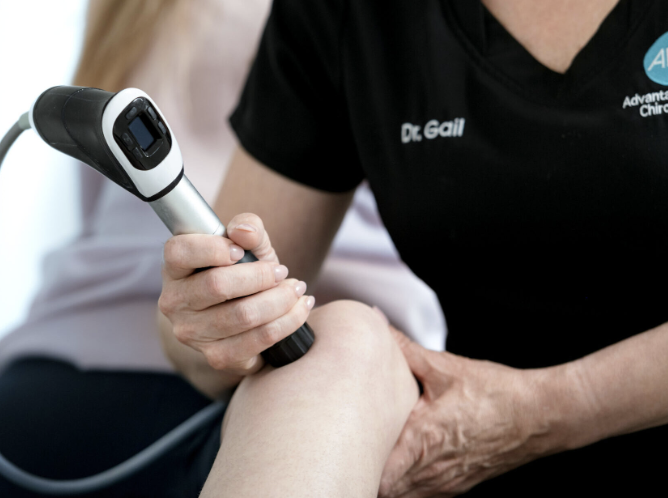
Shockwave therapy uses acoustic waves and may be incorporated into treatment for stubborn tendon and soft-tissue problems, including plantar fasciitis, tennis elbow, and chronic shoulder or joint pain.
Spinal decompression gently stretches the spine and may be helpful for some patients dealing with disc problems, sciatica, and chronic neck or lower-back pain.
The practice also offers red and near-infrared recovery therapy, which uses specific wavelengths of light to support cellular recovery, reduce inflammation, and promote muscle and joint recovery.
The goal is not to put every patient through the same treatment plan.
“We’re really focused on giving patients options,” Dr. Gail says.
For one patient, chiropractic care may be enough. For another, a combination of therapies may make more sense.
That individualized approach is central to the practice.
What Do You Want to Be Able to Do Again?
For a woman who has been living with stiffness or discomfort for months or even years, the idea of finally addressing it can feel intimidating.
Dr. Gail wants that first visit to feel different.
“When she walks into AFC, she can expect us to listen and feel heard.”
The conversation starts not only with what hurts, but with something even more important:
What do you want to be able to do again?
Maybe it is exercising without pain. Sleeping comfortably. Traveling without worrying about how your back will feel the next morning. Getting down on the floor with grandchildren and knowing you can get back up.
After discussing symptoms and goals, the Advantage team performs an evaluation and may take X-rays when needed. From there, they develop an individualized plan that could include chiropractic care, rehabilitation, or other therapies offered within the practice.
The goal goes beyond quieting a symptom.
It is helping the patient move better and stay active.
Stop Assuming It’s Just Your Age
Perhaps the most important message Dr. Gail wants women over 40 to hear is that discomfort and declining mobility should not automatically be written off as the price of getting older.
Yes, our bodies change.
But that does not mean every ache, limitation, or loss of movement should be ignored.
“The earlier we address those changes, the more options we have to help her keep doing the things she loves,” Dr. Gail says.
Maintaining mobility may also mean looking beyond one type of care. Dr. Gail encourages many of the same wellness practices she incorporates into her own life: regular chiropractic care, massage therapy, exercise, and stretching.
A strenuous workout, long trip, busy weekend, or unexpected injury can change how the body feels. Learning to listen before the body has to “scream,” as Dr. Gail describes it, is part of the shift toward preventive wellness.
At 40, 50, 60 and beyond, longevity is not simply about adding more years.
It is about protecting what we are able to do with them.
And that starts with continuing to move.
Advantage Family Care
18 Emerald Terrace
Swansea, IL 62226
