
Hormones & Identity: When Women Say “I Don’t Feel Like Myself Anymore”
There’s a moment in so many appointments where the clinical conversation pauses and something more honest comes out:
“I don’t feel like myself anymore.”
Not sick. Not broken. Just… off.
And that “off” feeling is often where the real story begins.
What’s Really Behind “I Don’t Feel Like Myself”?
I had a patient in her late 30s, busy, high-functioning, the kind of woman everyone depends on.
She came in saying: “I should be able to handle my life… but everything feels harder.”
She wasn’t sleeping well. Her patience was gone. She felt anxious, overstimulated, and emotionally flat at the same time.
The hardest part for her? She didn’t feel connected to herself, her kids, or even things she used to enjoy.
When we looked at her labs, it wasn’t random:
Low progesterone → contributing to anxiety, poor sleep, feeling “on edge”
Estrogen dominance → mood swings, irritability, emotional overwhelm
Elevated cortisol → wired but exhausted, difficulty recovering
Early insulin resistance → energy crashes, brain fog
Nothing about her life had dramatically changed. But internally, her hormones had shifted and her body was compensating.
That disconnect she felt wasn’t in her head. It was physiological.
When Someone Is Doing Everything “Right”… But Still Feels Off
Another woman I worked with was incredibly disciplined.
She was:
Eating clean
Working out consistently
Taking high-quality supplements
Staying hydrated
And yet she couldn’t lose weight. Her energy was unpredictable. She felt inflamed, puffy and frustrated.
She told me: “I feel like I’m working harder than ever and getting worse results.”
When we dug deeper, we found:
High cortisol from chronic stress + intense workouts without recovery
Thyroid function in the “normal” range, but not optimal for her
Low testosterone impacting strength, metabolism, and drive
Blood sugar instability she wasn’t aware of
Her issue wasn’t lack of effort. It was that her body had shifted and her plan hadn’t.
Sometimes the problem isn’t that you’re not doing enough. It’s that your body needs something different.
The Turning Point: When Lifestyle Isn’t Enough
There’s almost always a defining moment.
For one patient, it was sitting in her car after work, completely drained, realizing she had nothing left for her family.
She said: “I keep thinking if I just try harder, I’ll feel better… but it’s not working.”
That’s the shift.
From:
“I should be able to fix this”
To:
“Something deeper is going on”
That’s when we moved beyond surface-level changes and focused on root cause:
Supporting progesterone balance
Regulating cortisol patterns
Stabilizing blood sugar
Adjusting workouts to support her system
The change wasn’t instant, but it was consistent.
Within weeks, she noticed:
Better sleep
More stable mood
Within a few months:
Energy returned
Weight started responding
She felt present again
Not like a “new person,” but like herself.
What “Feeling Like Yourself Again” Actually Looks Like
This is the part that matters most because it’s not about perfection. It’s about recognition.
When women start to feel like themselves again, it shows up in everyday life:
You wake up without immediate exhaustion
You don’t rely on caffeine just to function
Your mood feels stable, not reactive or unpredictable
You can focus at work without constant brain fog
Your workouts feel productive instead of draining
You have more patience at home
You feel present in conversations instead of checked out
Your confidence returns; quietly, but noticeably
One patient said it best: “I didn’t realize how far off I was until I started feeling like me again.”
If You’re in This Right Now
If you’ve been telling yourself:
“This is just stress”
“I’m just getting older”
“I should be able to push through this”
There may be more to the story. Your body is not working against you. It’s adapting and asking for support.
That feeling of being “off” is often the first signal. And when you address what’s underneath it, everything starts to shift.
You don’t have to stay in that place.


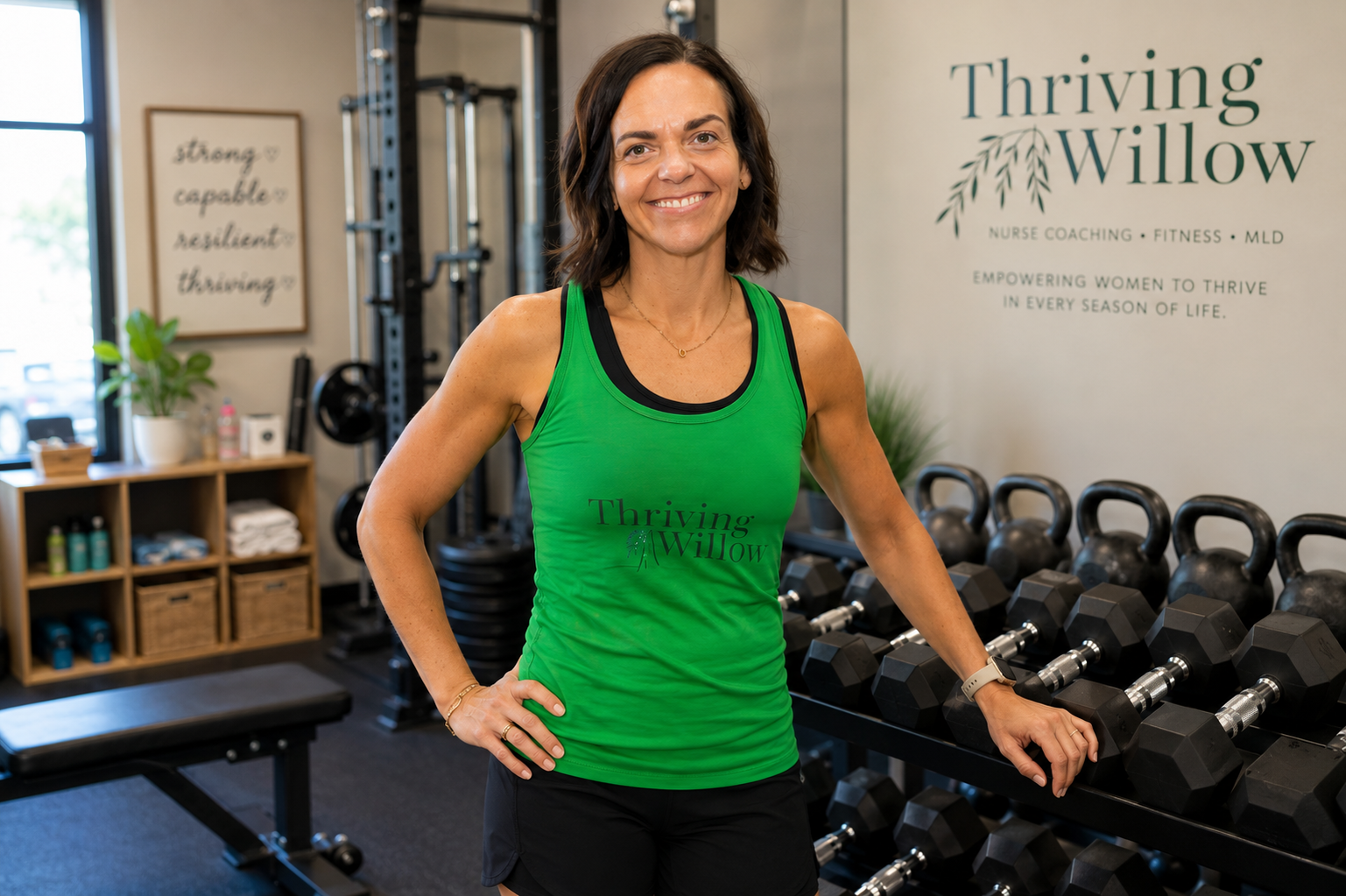
In recognition of World Menopause Day on October 18, Doreen Warfield of Studio Strong explores chronic joint pain during menopause and the role of movement. She shares how personalized strength training, consistency, and meeting your body where it is now can support a different approach to midlife aches and stiffness.