
Teresa Reiniger: The Grief We Carry, The Purpose We Grow Into

“Sometimes the very experiences that break your heart become the exact experiences that allow you to help someone else heal.”
For Teresa Reiniger, grief was never one isolated chapter. It became a thread woven quietly throughout her life — through motherhood, miscarriage, infertility within her family, caregiving, loss, work, emotional resilience, and eventually the deeply personal business she built in her sixties helping others navigate pain, transition, and healing.
Teresa’s story is not simply about grief.
It is about evolution.
It is about the way women’s lives often unfold in layers — where the experiences that shape us most are not always the ones we would have chosen, yet somehow become the exact things that later allow us to help someone else survive.
And today, that lived understanding is exactly what makes Teresa such a powerful grief coach.
Not because she speaks about grief from a distance.
But because she understands how grief actually lives inside real people.
Beginning Adulthood Early
Teresa’s adulthood began at 18.
She met her husband when they were young, and from early on, she said there was a steadiness about him that made her feel safe. She knew quickly he was someone she could build a life with, and shortly after high school, the two married, moved out, and began building a life centered around family and motherhood. Together, they built a home in Collinsville where they raised their three daughters over decades of family life — creating the foundation that would shape so much of Teresa’s journey in the years ahead.
Like many women of her generation, Teresa’s early adulthood was rooted in caring for others long before she ever considered what her own “career” or purpose might someday become.
She stayed home with her daughters until her youngest entered kindergarten before slowly stepping into the workforce through office and receptionist roles at a nursing home, a Quick Lube franchise, a prosthetic and orthotic lab, and later a plastic surgeon’s office.
At one point, Teresa unexpectedly lost a job, something that initially felt discouraging and uncertain. But instead of immediately rushing into the next role, she found herself home for the summer with her daughters — time she now looks back on with gratitude. What once felt like a setback quietly became one more reminder that life’s unexpected transitions sometimes carry meaning we only recognize later.
Looking back now, Teresa sees something she could not yet recognize then:
Every role was quietly teaching her how to sit with people during vulnerable moments.
Illness.
Aging.
Recovery.
Transitions.
Caregiving.
Identity shifts.
Even before grief became the center of her work, compassion already was.
The Kind of Grief Women Carry Quietly
Teresa openly shares that she experienced miscarriages between pregnancies — losses many women carry privately while continuing to function publicly.
At the time, there was little space for openly processing those experiences.
Life moved forward quickly.
There were children to raise. Responsibilities to manage. A household to run.
Like many women, she kept going.
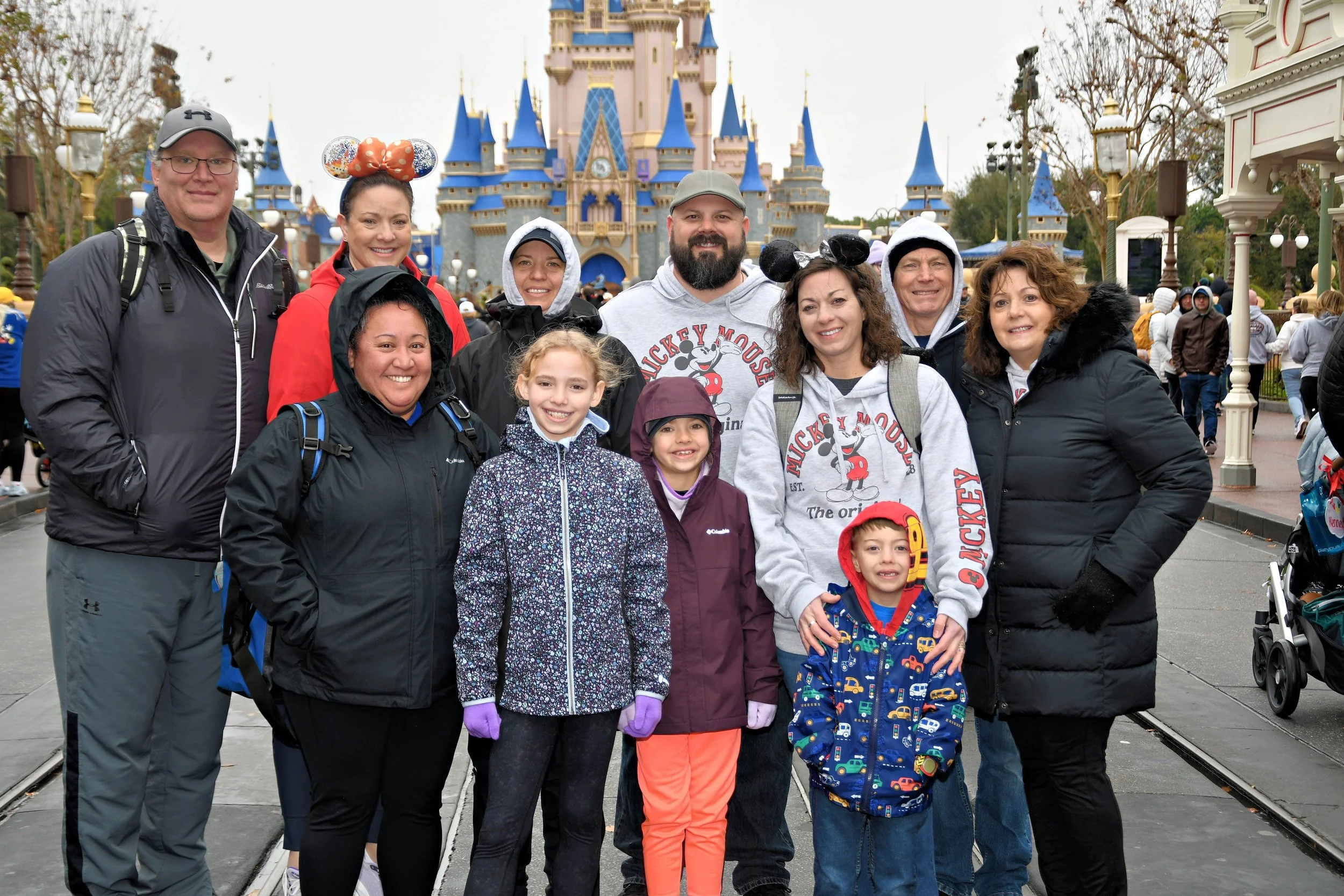
Years later, grief returned to her family in deeper and more complicated ways as her daughters began navigating infertility, pregnancy loss, fertility treatments, surrogacy, and the emotional uncertainty that can surround becoming a mother. Her oldest daughter endured five miscarriages before eventually welcoming a daughter through surrogacy. Her middle daughter also experienced multiple losses along the way.

Today, Teresa describes her grandchildren as miracles. However she speaks honestly about the years that came before those miracles — the waiting, disappointment, emotional exhaustion, uncertainty, and heartbreak that families quietly carry through infertility journeys. Watching her daughters struggle changed Teresa deeply.
Not only because she understood loss herself, but because there is a particular kind of helplessness that comes with watching your children hurt while being unable to take the pain away.
That experience became one of the emotional turning points of her life.
Not because it immediately led her into grief work, but because it forced her to understand grief differently.
Infertility grief is often invisible.
Pregnancy loss is often minimized.
And many women are expected to continue functioning while carrying enormous emotional pain privately.
“People think grief is only about death. But grief shows up in so many forms.”
Those realizations stayed with her.
Years later, they would become part of what allows Teresa to connect so deeply with the women and families she now supports.
The Funeral Home Years
When Teresa first took the position at the Kurrus Funeral home, her daughters questioned whether she would be able to handle the emotional weight of the work.
However, another layer of understanding began to form.
She spent nearly 15 years helping coordinate funerals, obituaries, churches, ministers, musicians, schedules, and family logistics during some of the hardest moments people experience.
To Teresa, it never felt like “just a job.”
It felt like ministry.
She witnessed firsthand what happens when families gather after loss. She saw heartbreak, conflict, love, memory, exhaustion, and the enormous emotional weight people carry while trying to make practical decisions in the middle of grief.
She also saw beauty. Not beauty in death itself, but in remembrance.
In the stories people told.
In the photographs families chose.
In the way someone’s life could still bring people together even after they were gone.
“You see every version of grief,” Teresa said. “You see people trying to hold themselves together while their world has completely shifted.”
It also changed the way she viewed people.
“You realize pretty quickly that grief touches everybody.”
Working at the funeral home also reshaped the way Teresa understood grief itself. While many people associate funeral homes only with sadness, Teresa says some of the moments that stayed with her most were unexpectedly human — and even joyful. She remembers hearing families gathered in another room laughing together while sharing stories about someone they had lost. At first, those moments surprised her.
Over time, she began to understand something deeper about grief and remembrance.
“It wasn’t disrespectful,” Teresa explained. “It was a connection. It was people remembering someone they loved and sharing stories that brought them back into the room for a moment.”
That perspective stayed with her.
The funeral home taught her that grief is not always only tears and devastation. Sometimes grief and love exist side-by-side. Sometimes sorrow and laughter share the same room.
In many ways, those years helped Teresa understand that healing is not about forgetting loss. It is about learning how to carry it while still allowing connection, memory, and even moments of lightness to exist alongside it.
What America Gets Wrong About Grief
One of the most powerful parts of Teresa’s story is her perspective on how grief is handled culturally.
In many cultures around the world, grief is visible. Shared. Supported communally. People are allowed to cry openly, gather for extended periods, and express emotion without embarrassment.
However, here in the United States, Teresa believes people are often taught the opposite from a very young age.
Be strong.
Push through.
Go cry somewhere private.
Don’t make people uncomfortable.
“We’re taught to be strong and keep moving,” Teresa said. “A lot of women don’t feel like they have permission to stop and process what they’re carrying.” And according to Teresa, that grief does not simply disappear because it goes unspoken.
It settles into the body.
“It can show up emotionally, physically, mentally, and even spiritually,” she explained.
Over time, through both personal experience and formal training, Teresa began seeing connections between unresolved grief and chronic stress, anxiety, exhaustion, emotional numbness, coping patterns, and even physical health struggles.
As she studied grief more deeply, she realized something that now shapes much of her work.
Most grief is layered.
A woman grieving divorce may suddenly reconnect with abandonment wounds from childhood.
The death of a parent may reopen pregnancy loss from decades earlier.
Job loss may uncover grief around identity, confidence, or purpose.
The losses stack on top of one another.
And because many people never fully process earlier pain, new grief often awakens old grief.
“So much grief is stacked grief. One loss wakes up another one.”
That realization became central to her work as a coach. Teresa is not simply helping people process one event. She is helping them understand what they may have been carrying emotionally for years.
The Book Idea That Changed Direction
Teresa says the beginning of her business came from what initially felt like a simple exercise. During a women’s networking circle hosted by the executive director of the chamber, participants were asked what they had always wanted to do.
Her answer surprised even her.
She announced she wanted to write a book by age 60 called How I Became a Grandma the Non-Traditional Way. At the time, she believed the story was primarily about infertility, miscarriage, surrogacy, and the complicated emotional realities many modern families quietly navigate.
When she began interviewing people and recording conversations, she realized the deeper thread underneath every story was grief. Not only grief connected to death. But grief connected to expectations, identity, motherhood, transitions, disappointment, relationships, health, and life itself.
That realization led to the launch of her podcast, Labor Pains, in June of 2020.
What began as conversations around infertility and child loss quickly expanded into something larger. Teresa realized she did not simply want to tell stories. She wanted to help people heal.

Helping Women Carry Less Alone
In 2021, Teresa formally began pursuing certifications and training to become a grief specialist and coach.
She studied grief coaching, neuro-linguistic programming (NLP), and eventually immersive 9D breathwork — a healing modality involving guided breathwork, music, affirmations, somatic touch, sensory elements, and emotional release work.
Even while building the business, life continued asking her to walk through grief personally. Her mother became ill with cancer and passed away at the end of 2022. Teresa suddenly found herself balancing caregiving responsibilities, family dynamics, and estate responsibilities among 12 siblings while also trying to grow a business rooted in emotional support.
Once again, the work became personal before it became professional.
She often speaks about how stepping stones only make sense looking backward. And looking backward now, Teresa can see how every chapter prepared her for the next one. The motherhood, miscarriages, funeral home, caregiving, interviews, losses, listening.
None of it was wasted.
Today, Teresa works with people experiencing many forms of grief — death, infertility, divorce, job loss, identity shifts, life transitions, and emotional trauma.
She intentionally keeps her client load small because of the emotional depth involved, saying she wants to truly be present with the people she works with rather than operate at a volume that disconnects her from the humanity of the work.
“Most people don’t need someone to fix it,” Teresa said. “They need someone willing to sit with them, listen, and let them feel what they’re feeling without trying to rush them through it.”
“Sometimes the things people say, like “at least…” or “everything happens for a reason,” can make the grieving person feel like they have to defend their pain or make it smaller which is why we hold things in many times. Those statements are very dismissive of the pain and emotions.”
“Sometimes the best thing to say is, “I don’t know what to say, and I’m here.” Or, “Tell me about them.” Or, “I’m going to keep checking on you.” Or “This sounds incredibly hard.”
That philosophy shapes the way Teresa coaches. Her work is not centered around forcing positivity or quickly “moving on.” Instead, she creates space for people to feel seen, heard, and emotionally safe.
Recently, she has begun collaborating with a nutrition-focused coach to explore the relationship between emotional protection, grief, hormones, stress, and the body itself. Because Teresa believes emotional pain and physical health are often more connected than people realize.
Particularly for women.
Women who have spent decades caring for everyone else.
Women who have learned to suppress emotion in order to survive.
Women whose bodies often carry stress long after their minds try to move on.
“Emotionally, I think it can make women feel disconnected from themselves. Sometimes they don’t even know what they feel anymore because they’ve been in survival mode for so long.”
The Emotional Weight Women Carry Through Midlife
Teresa says, “I think grief shows up in so many stages of life because grief is really about loss, and loss is not only death. We can experience some type of loss every day of our life because what we expected that day may never happen. So, there is a loss of expectation daily, so this can cause heavy emotion, but they are still losses that can connect to the significant losses we have experienced which increase the emotion. We have all experienced someone exploding emotional over something “small”. It wasn’t just that experience, there was most probably many other experiences that have been pushed down and still being held in the body and mind. You have heard the last straw. Grief, loss and the emotions of them are definitely part of the last straw.”
“We grieve relationships. We grieve marriages. We grieve friendships that change. We grieve the version of life we thought we were going to have. We grieve our kids growing up, our parents aging, our bodies changing, careers shifting, and even parts of ourselves we feel like we lost along the way.”
She believes for women in midlife especially, ‘I think so much starts to come up. You may have spent years being the caregiver, the mom, the wife, the responsible one, the “strong” one. And then all of a sudden, something shifts. Your kids don’t need you in the same way. Your marriage may be changing. Your parents may need more from you. Or many women get to a point, and they look at themselves and their life and thinking, “Who am I now?”
I see this often with women who say, “I should be grateful,” or “Nothing is really wrong,” and inside they feel unsettled or overwhelmed. And I think sometimes what they’re feeling is grief over the parts of themselves they put aside for everyone else.
Teresa thinks and feels that season can become a really powerful turning point. It’s not always easy, and it can be an invitation to come back to yourself and decide how you want to live this next part of your life. It’s a chance to discover who they are again. “These are women I really love to support.”
Where Teresa Hopes This Work Leads Next
“I’d love to see society stop treating grief like something people should “get over” and start treating it like something people need support through. Because grief is not just sadness. It’s learning how to live after life has changed. And I think if we could become more comfortable talking about it, listening to people, and offering support beyond the first few weeks, it would make a huge difference. That’s really my heart behind this work. I want people to feel less alone, and I want families, workplaces, and communities to feel better equipped to show up for people who are grieving.”
Not Done Becoming
As Teresa looks toward the future, she is not talking about slowing down nearly as much as she is talking about expanding — expanding the reach of her work, the conversations surrounding grief, and the ways women are supported through life’s hardest transitions. With her husband nearing retirement and her own purpose continuing to evolve, she envisions a season filled with greater flexibility, travel, speaking opportunities, deeper community connection, and work that reaches beyond one-on-one coaching into workplaces, schools, nonprofits, and women’s spaces where emotional support is often missing.
One of the most meaningful next steps in that expansion is the new space Teresa will soon be leasing — a place that will carry the name “Becoming: A Space to Breathe, Heal & Begin Again.” In that space, she plans to offer one-on-one coaching, group coaching, day retreats, 9D breathwork, support groups, and community talks. More than just an office, Teresa sees it as a warm and welcoming place where women can exhale, feel seen, and begin to reconnect with themselves after loss, transition, or emotional overwhelm.
Perhaps what feels most meaningful is that Teresa is building a life that finally reflects everything she has learned through decades of motherhood, caregiving, heartbreak, resilience, and healing. Not a life built around shrinking with age, but one built around becoming more fully herself.
For more information about Teresa’s services:
https://www.facebook.com/teresa.reiniger
https://www.facebook.com/LivingAfterGrief
https://www.facebook.com/femalevoiceslifeandloss
Opening soon:
Becoming: A Space to Breathe, Heal & Begin Again
9500 Collinsville Road, Suite 6, Collinsville, IL.

GlowInto Reflection
What makes Teresa’s story so meaningful is not simply that she became a grief coach later in life. It is the reminder that some women spend decades gathering wisdom before they fully recognize its value.
So much of women’s emotional labor happens quietly. We carry heartbreak while packing lunches, showing up to work, caring for parents, supporting children, holding marriages together, and continuing to function through losses the world often minimizes or rushes past. Many women become experts at surviving long before they ever stop to ask themselves what they need emotionally.
Teresa’s story gently challenges that pattern.
She speaks openly about grief not as something to “get over,” but as something that deserves acknowledgment, support, and space. In doing so, she gives language to experiences many women have felt but never fully named — the grief attached to infertility, changing identities, aging, shifting family roles, emotional exhaustion, and the quiet ache of carrying too much for too long.
There is also something deeply hopeful about watching a woman begin a new chapter at nearly 60 years old, not by abandoning her life experiences, but by building from them.
Teresa is not reinventing herself from scratch.
She is becoming more fully herself because of everything she has lived through.
And maybe that is one of the most important reminders stories like hers offer women:
It is never too late for pain to become purpose, for healing to become connection, or for a woman to begin again with a deeper understanding of who she is and what she still has to offer the world.




Meet Holly Wiskamp and Renee Famula, the women behind Hot Flash and Sassy, a local St. Louis podcast opening honest conversations about perimenopause and menopause. Through personal stories, humor, and conversations with guests, they help women feel understood, less alone, and more confident asking questions about their health. Discover how their own experiences inspired the podcast, why these conversations matter, and how GlowInto will be joining them this fall.