
In collaboration with Stephanie Hemker, PT, DPT
Pelvic Floor Physical Therapist
Hello, all! Your friendly neighborhood physical therapist here! Welcome to Bex Talks, where I'll discuss different topics related to health, longevity, running, chronic pain, pelvic health, etc. I'm happy to answer questions so if there is a physical therapy related topic that you are curious about, feel free to email me at Rebecca@WholeBodyFix.com. If I use your question, I'll send you a coupon for a free yoga class at WholeBody!
LET'S TALK PEE!
There are 3 types of urinary incontinence:
Stress Urinary Incontinence — This is the type that we are all familiar with- the little (sometimes not so little) leakage that comes with coughing, laughing, sneezing, running, etc. This is due to your pelvic floor being unable to adjust to the increased abdominal pressure during these activities.
Urge Urinary Incontinence — This is when you have a sudden and intense urge to pee that may even result in not making it to the bathroom in time. In a normal urinary system, the bladder fills, the bladder muscle contracts, the message is sent to your brain to go to the bathroom. When you are not able to go to the bathroom right then, a properly functioning pelvic floor will gently contract telling your bladder that it is not yet time to go, allowing the bladder to relax. When you have pelvic floor dysfunction, that message doesn't get to the bladder which causes it to contract earlier and stronger- causing the intense urge to go.
Mixed Incontinence — Like the name suggests, this is a combination of the 2 types. I know, right?!?!? You can have both! How unfair!
Both of these types of urinary incontinence can be caused by your pelvic floor being overactive (tight) or underactive (weak). The only way to determine which is the case for you is to be evaluated by a pelvic floor PT.
Now, you are probably wondering how an overactive pelvic floor can cause issues. Well, if I asked you to hold a 5# dumbbell all day then asked you to use your bicep normally by straightening and bending your elbow, you would have a lot of trouble because the constant contraction of that muscle all day has now caused it to be unable to function properly. Your pelvic floor is the same.
IF YOU ARE DOING KEGLES- STOP!
To be clear, Kegles are NOT bad, they are very good actually- when done at the right time- meaning you have had your pelvic floor evaluated by a pelvic floor physical therapist who has determined that your pelvic floor muscles are indeed weak and not just tight. When you do Kegels with a tight pelvic floor you risk making the tightness and dysfunction worse. So, consider the above example with the 5 pound dumbbell. Now, think what that muscle would do if I asked you to curl 10 pounds after an entire day of holding a curl with 5 pounds. Not only would you not be able to do it effectively, but it would likely lead to even more dysfunction. That's is the reason why we relax the muscle before we strengthen it.
WHAT CAN YOU DO?
Drink plenty of water. When you limit your water, the urine in your bladder is more irritating, which makes the issue worse. Aim for a minimum of 64 oz.
Avoid food and drinks that are irritating to your bladder. Click here for a full list: Bladder irritant list.
Avoid the “just in case” bathroom trip. This trains your body to go too soon and puts your bladder in control instead of your pelvic floor.
Start this Diaphragmatic breathing exercise to relax your pelvic floor.
Periodically throughout the day check in with your pelvic floor to see if you are holding it tight. If you are, this is normal. We often hold our pelvic floor tight when we are stressed, nervous or just busy. Eventually this becomes a habit and pelvic floor tightness results. When you notice that you are holding those muscles tight, do a couple reps of the diaphragmatic breathing and really focus on relaxing your pelvic muscles.
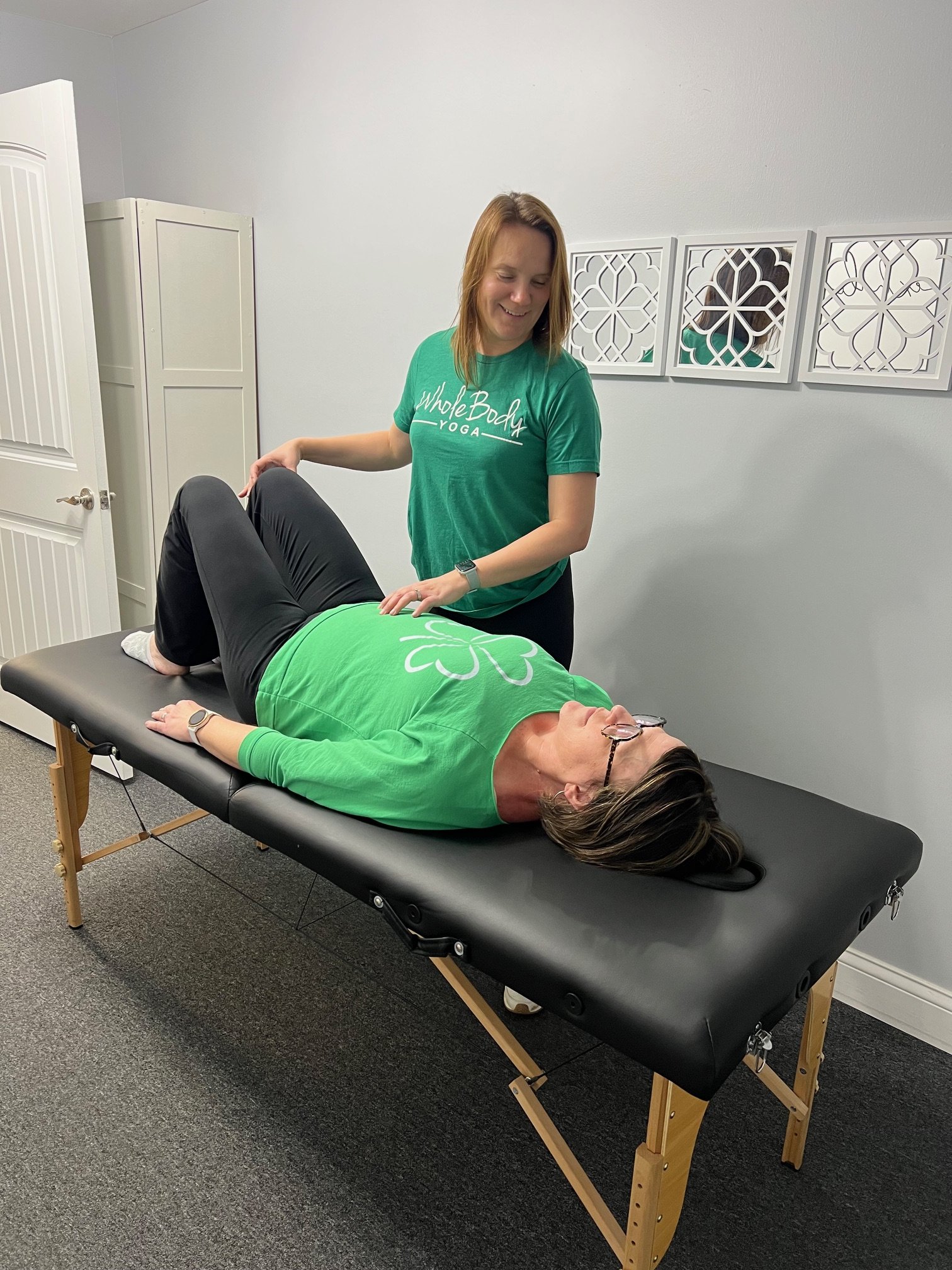
WHEN TO SEE A PELVIC FLOOR PHYSICAL THERAPIST
You can see a pelvic floor PT at any time. In IL we have direct access so you no longer need a doctor's order to start treatment.
You can also try the above techniques for 3-4 weeks and see if your symptoms improve. If they do not, it's a good idea to be fully assessed by a pelvic floor PT.
We have 2 pelvic floor PTs at WholeBody Physical Therapy and even offer evening and weekend appointments. If you have questions on whether pelvic floor PT is right for you or if you want to schedule an evaluation, email me at Rebecca@WholeBodyFix.com.
Rebecca Willmann MPT, BSHS, CMT
Physical Therapist/ Owner @ WholeBody Physical Therapy, Running, & Yoga Studio
Certified Massage Therapist
Certified Running Coach
Postpartum Corrective Exercise Specialist