
Courtney Adams described herself as a cheerleader long before she knew how that part of her personality could become a career. She had been a high school cheerleader, but what she was describing went beyond a uniform or a place on the sidelines.
“I don't want to be the center of attention, but I will tell you good job,” she said.
That instinct has followed her through different jobs, owning a vintage store with her mother, raising daughters, and finding her way into work that brings many of her experiences together.
Today, at 44, Courtney helps people discover Belleville as the city’s Marketing and Tourism Coordinator. Through Explore Belleville, she draws attention to the businesses, events, and experiences that give the community its character.
But as we talked, I became interested in the woman behind that work. The one who can walk into a business and immediately see a possibility. The one who wants to help, has more ideas than she can easily switch off, and has learned that she does not need a detailed plan for every chapter ahead.
There was a time when she worried that stepping away from the expected path might keep her from finding her place. Now, looking back, she can see how much she was learning along the way.
Finding somewhere to belong
Growing up, Courtney understood the expectation: go to college, earn a degree, and find the career you would spend your life doing.
As the oldest of three children, she did not have an older sibling showing her what those steps might look like. Friends were leaving for school. She had interests and ideas, including journalism, but the pressure of getting everything right became overwhelming.
She attended college, then accepted a job and discovered that she enjoyed working and earning a paycheck. Still, there was a fear attached to choosing a different route. What if a decision she made so young meant she would never get to do the things she wanted?
Courtney kept learning through the work itself. In her early twenties, she moved to St. Louis and worked in operations for a web hosting company. It was a time when blogging and social media were beginning to change how people communicated, and businesses were trying to understand what those changes meant for them.
How could they use Twitter? Would a newsletter help? How were they supposed to reach people through these unfamiliar tools? Courtney was helping work through those questions before social media management became an established career.
Outside of work, she was finding people who expanded her world. Music, local shows, blogging, and connections made through MySpace brought her into a circle of creative people. She met writers, musicians, and people making videos of local artists. She contributed to a website about women experiencing St. Louis from their own perspectives.
She also struck up a friendship with a fellow blogger who had moved to Belleville around the same time Courtney moved to St. Louis. Each was discovering things about the place the other knew, sharing what they found and giving one another a different view.
Courtney recognizes that period as a time when she began finding her personal identity. Her curiosity had somewhere to go. The things she naturally enjoyed were helping her connect with people and do useful work. The young woman who liked encouraging others was beginning to find ways to put that instinct into practice.
Choosing a different life
Around the time Courtney was expecting her first daughter, Parker, she opened a vintage store with her mother. Her father had promised that when he retired, he would help them get started. Together, they took the opportunity.
Their tastes complemented one another. Her mother loved mid-century pieces, while Courtney had an affection for the 1970s. They went looking for merchandise, filled the store, and built relationships with customers who shared their enthusiasm for giving something old another life.
But several major changes arrived within that same chapter. Courtney became a mother. Her family experienced serious health scares. And while helping run the store, she made the decision to leave her marriage and return to Belleville with her baby.
When I asked what she considered her first real turning point into adulthood, she returned to that decision. She recognized that the life she was living needed to change, and she allowed herself to act on that knowledge.
Courtney was careful to acknowledge the support she had. Her family was there for her, and she knows that other women face similar transitions with far fewer resources. That support mattered. So did the decision she had to make for herself.
Afterward, she became clearer about what she wanted and more willing to speak her mind. Making one difficult choice gave her confidence that she could make others.
Meanwhile, she and her mother were trying to keep the store running through circumstances that demanded their attention elsewhere. There were customers coming through the doors. The challenge was having enough of themselves left to take care of everything.
They explored ways to make it work, including bringing in vendors. They considered selling online, too, but Courtney understood the labor involved in photographing, describing, and listing individual vintage pieces. Eventually, they chose to close.
“Maybe we'll do this again later, but it's fine,” she recalled.
That part of her story deserves room because closing something you worked to build can be a thoughtful decision. They had customers. They had created something people enjoyed. They also had a family and limits on what two people could carry.
Courtney could value the experience and still let the store go. What she learned there stayed with her.
Something worth keeping
The store also introduced Courtney to someone who would become part of her next chapter. Before she really knew Josh, he had arranged an art school project with her mother and created artwork for the business. Months after her marriage ended, Courtney met him in the store.
That artwork now hangs in their living room.
I loved that detail. An introduction that happened through her mother and a project for the store became something they would eventually bring into their family home.
By the time Courtney and Josh began their relationship, she was clearer about what she wanted. Family was central. She wanted a partner who wanted to build that life with her.
Josh has been in Parker’s life since she was about a year old. At first, the quiet artist was unsure what to do around a small child. Parker, Courtney recalled, had plenty of personality and very little hesitation. Over time, the man who had wondered how to interact with her became the dad making Barbie clothes.
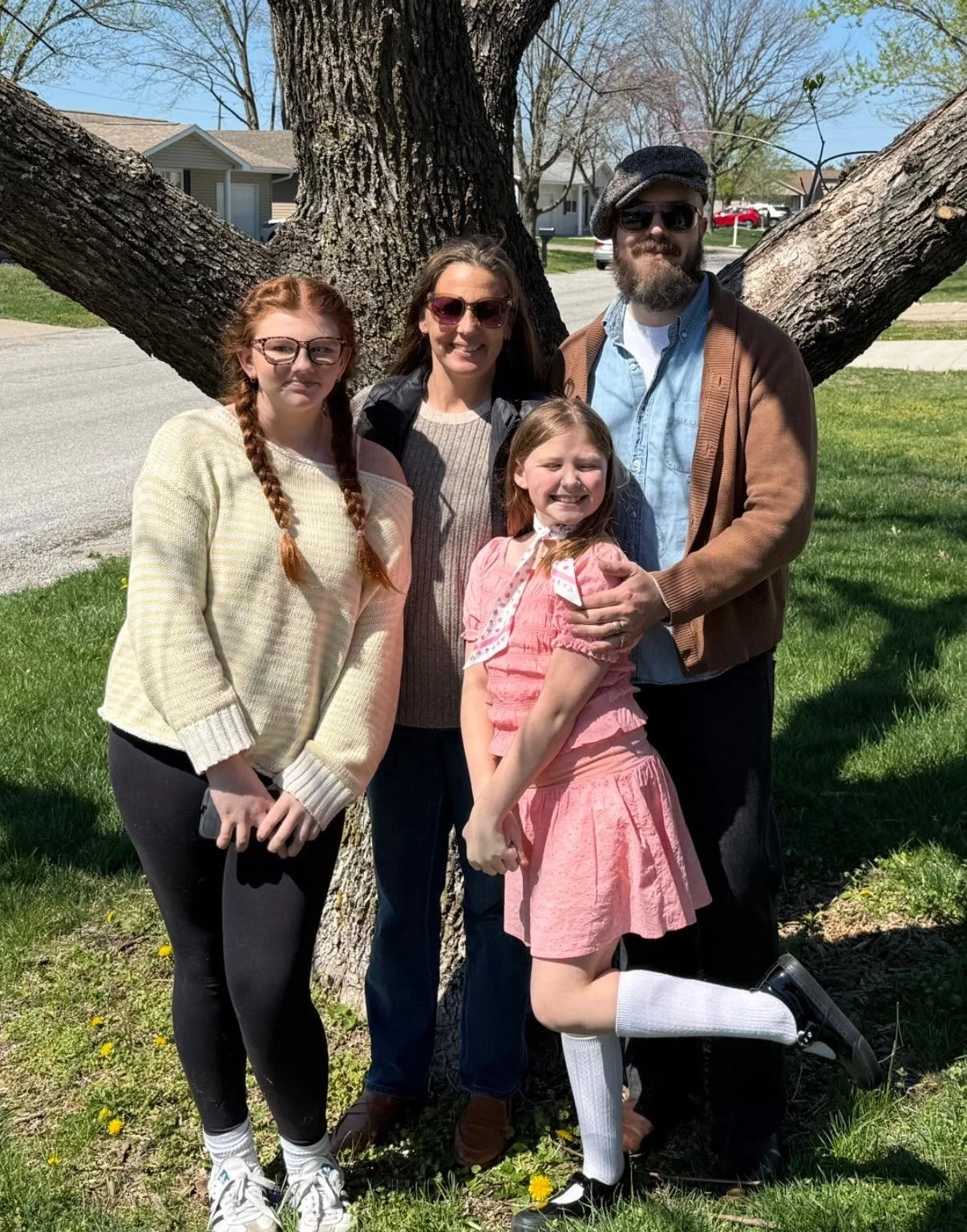
Today, Courtney and Josh are raising two creative daughters, Parker and Charlotte. Charlotte, their younger daughter, creates worlds, habitats, and characters. For holidays, she asks for a ream of white copy paper.
I kept thinking about that request. A stack of blank paper is something she can turn into whatever she imagines.
Courtney jokes that drawing is the creative skill the rest of the family has covered. Her own creativity finds its way into writing, websites, decorating, and the garden. She can picture exactly what she wants. Explaining it to her graphic designer husband is sometimes another matter.
He wants to know which shade of green. She wants to explain how the green should feel.
There is affection in the way she tells it. They bring different temperaments and abilities into a house where there always seems to be something being made.
Understanding her own mind
Courtney’s ideas arrive quickly. She can look at a business or a project and see a small change that might make a difference. Sometimes her greatest challenge is turning that part of her mind off when the workday ends.
She jokes about having self-identified, undiagnosed ADHD. Over time, she has come to appreciate the creativity in how she thinks while recognizing the need for systems that help her follow through.
She values allowing people to find what works for them. One person may need a written reminder. Another needs a different way of keeping something in view. Courtney knows that sending a message through the wrong channel can mean it disappears into the rest of a busy day.
Understanding herself has also taken on another layer in her forties. She shared a frightening experience with dizziness that led to an emergency room visit and concerns about a possible mini-stroke. A lengthy period of follow-up appointments followed.
Courtney says she eventually learned that the symptoms she had been experiencing, including recurring panic attacks, were connected to hormonal changes during perimenopause. Medication and an estrogen patch helped her feel better.
What stayed with me was the uncertainty she described while she was searching for answers. She is willing to talk about it because she remembers what it felt like to need information and struggle to find it.
A woman sharing her own experience cannot answer every question for someone else. But she can help another woman recognize that something deserves attention and give her language to begin that conversation. Courtney’s openness comes from that familiar instinct to help.
A career built through experience
After owning the store, Courtney brought her experience into her work with Belleville Main Street through The Greater Belleville Area Chamber of Commerce. She understood what it meant to open the doors, serve customers, arrange merchandise, and try to keep up with everything a small business requires.
When she visited a local owner, she could recognize a task that had become one more thing on an already long list. She recalled stopping into Sawdust and Glitter and seeing merchandising work waiting to be done. It was something Courtney enjoyed and had experience doing. She offered to come back after work and help.
Her instinct was simple: “Can I help you?”
She wanted the business to look good. She wanted its owner to do well. And she could see a practical way to contribute. That is an important part of understanding Courtney’s approach. Her ideas often begin with noticing where she can be useful.
Her next opportunity grew out of relationships and experience she had already built. While Courtney worked at the chamber, longtime city tourism coordinator Cathleen Lindauer had an office next to hers. Their work overlapped enough that they helped one another, and Courtney sometimes joked about how much she would enjoy getting her hands into tourism.
When Cathleen retired, the mayor approached Courtney about the role.
By then, she brought a background in operations, writing, marketing, digital communication, small business ownership, and community work. Some of those skills had been developed before there was a clear job title for them. Others came from responsibilities she could never have predicted would lead here.
Together, they had prepared her to look at Belleville with both affection and a practical understanding of how to help people discover it.
Helping a whole city be seen
Courtney’s approach to marketing begins with a question about the problem that needs solving.
“Just because this option exists, it doesn't mean we need it,” she said. “It doesn't mean that solves our problem.”
She understands digital tools and enjoys learning them. She also pays attention to what people are asking for.
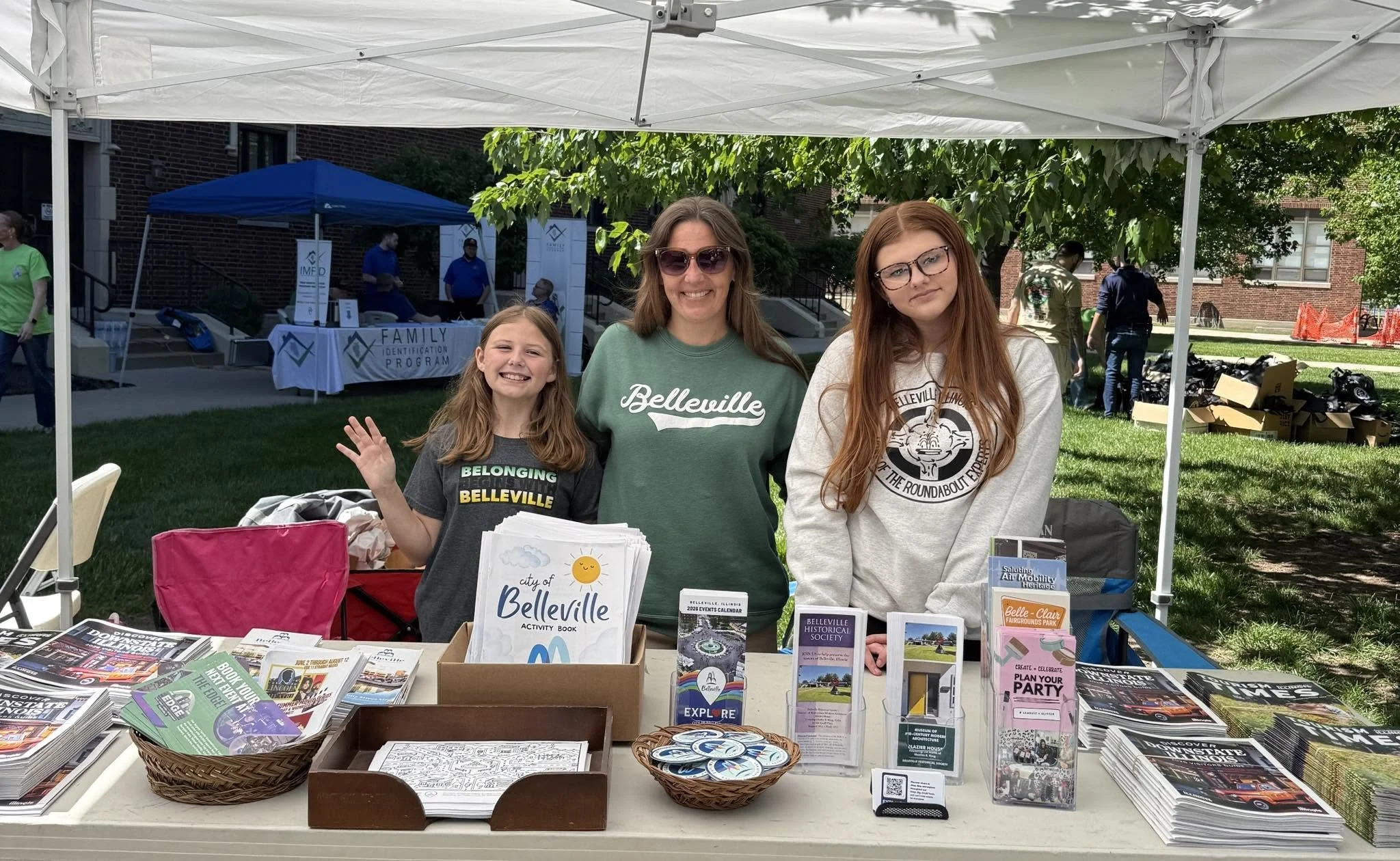
That thinking helped shape Explore Belleville, giving visitors a place to find things to do without having to navigate a city website built around permits, departments, and municipal information. She wanted a place that represented the whole community.
“West End needs love too.”
It is a short sentence, but it says a great deal about how she sees the job. Downtown matters. So do the businesses and experiences beyond it.
Courtney also helped bring that information into a printed visitors guide. Through conversations, she had heard that people missed having something tangible. The guide gave them something to pick up, browse, and keep.
Residents responded, too. People who had lived in Belleville for years were reminded of places they had forgotten or had not visited in a long time.
I find something encouraging about that. We often assume discovery requires going somewhere unfamiliar. Sometimes someone simply needs to help us see our own community again.
Courtney knows a visitor may arrive for a race, a festival, or one particular destination. If that person learns what else is nearby, the visit can become something more. A meal. A shop. A reason to return. Her work connects those possibilities.
Listening to her, I could hear how naturally she had grown into a role that uses the part of herself she once struggled to translate into a career. The cheerleader had found a way to help people be seen.
Making room for the life she has
When I asked Courtney what she imagined doing next, she did not offer a detailed plan. She enjoys her work. She has plenty of projects she wants to pursue for the city. But outside of that work, her attention is on her family, her home, and taking care of herself.
Her husband’s schedule, her daughters’ changing needs, and the demands of events that happen outside ordinary office hours all require coordination. She wants time alone with each girl. She wants to work in the garden. There is a new puppy to take care of.
She laughed about the pleasure she now takes in planning her week around a garden project, something her younger self might never have expected.
“I invest in our family and myself,” she said.
That investment has become more deliberate. She still enjoys having things to do. She is also learning to choose those things with more care and to recognize when sitting on the couch with the dog is enough for the day.
For a woman whose mind can move in so many directions, there is value in knowing where she wants to put her attention.

A conversation with her mother
One of the lessons Courtney returns to came from her mother. When something upset her as a child, her mother encouraged her to put that energy somewhere positive.
If she was angry, she might go to the pool and jump off the diving board again and again. The feeling had somewhere to go. She could move through it by doing something.
As an adult, that same instinct might send her into the garden or into rearranging a room. Her husband can recognize the pattern. A change in the living room may suggest that it has been a difficult day.
They can laugh about it, but Courtney sees how deeply that lesson shaped her. Through different challenges, she had learned to look for something constructive she could do with what she was feeling.
When I asked what she would tell her younger self, Courtney found herself thinking instead about what she would say to her mother. Raising daughters of her own had given her a new appreciation for the lessons her mother taught her and the patience those years required.
Now she is raising a teenager while navigating perimenopause herself. She can look back at the years when her mother was doing something similar and understand them differently. The arguments about clothes. The frustration. The ordinary moments that felt enormous at the time.
Motherhood has given her another view of the woman who raised her. There are things she wants to thank her for now. There are things she can laugh about, apologize for, and finally appreciate.
I thought that was one of the most revealing moments in our conversation. Asked to look back at herself, Courtney found herself recognizing her mother more clearly. The wisdom she carries now has roots she can see.
I left our conversation thinking about how much pressure we put on knowing where life is going. Courtney once worried that a decision about school could determine everything she would be allowed to do later. She could not have known how operations work, early blogging, music connections, vintage retail, motherhood, and community work would eventually come together.
She kept learning. She made difficult decisions with support from people who loved her. She discovered that she could change direction and still build a life that felt like hers.
Today, she helps people recognize what is worth exploring in Belleville. At home, she is raising daughters who have their own ideas, their own creativity, and their own lives beginning to unfold.
And somewhere nearby, there is a garden project waiting.
Courtney still has plenty she wants to do. She is giving herself room to enjoy what she has built, too.
Learn more about Explore Belleville: https://explorebelleville.net/
