
Melanie Holden: Designing a Life That Fits
Age 50-O’fallon, IL
Some women arrive at midlife and begin asking bigger questions about work, identity, and how they want life to feel. For Melanie Holden, those questions were not abstract. They lived in real time, through career pivots, motherhood, risk, and the slow confidence that comes from experience.
Today, Melanie is the woman behind Holden Design Group, known for creating spaces that feel personal, thoughtful, and deeply lived in. But the story of how she got there is not a straight line. It is one built through years of learning, adjusting, trusting her instincts, and eventually creating a business that fit the life she wanted to live.

A Love Story That Started Far From Home
Melanie met her husband Dave on spring break in 1995 in South Padre Island. Their groups were staying in neighboring condos, and they met on the beach. It was the kind of story that already felt unlikely, but what made it even stranger was what they discovered after coming home.
Their lives had been brushing up against each other for years.
Melanie’s mother worked for Dave’s father at Scott Air Force Base. She coached gymnastics, and his sisters were involved there. His mother had even listed her parents’ house when they were selling it. There had been so many opportunities for them to cross paths before they ever did.
But the actual meeting happened far away from home, and the relationship that followed took time. They dated long distance while she was at Illinois State and he was at Carbondale, with Dave making long drives to see her, sometimes more than once a week. They did not rush into marriage. They were together for years before marrying, building a relationship that had room to grow naturally alongside the rest of their lives.
That steady, grounded partnership would later matter enormously when the stakes get higher.
The Early Spark
Long before Melanie had her own company, design was already part of how she moved through the world.
She grew up in a home where her mother welcomed change and encouraged her to participate in it. She was not just a child noticing her surroundings. She was rearranging her room, helping choose wallpaper, weighing in on furniture, and learning early that spaces could shape how people felt.
That early instinct stayed with her, but what made it more than an interest was her realization that she wanted a different kind of adult life than what she had seen around her.
“I knew too many adults that hated Mondays,” she said. “You’re spending the majority of your life there. Why not do something that you love and look forward to?”
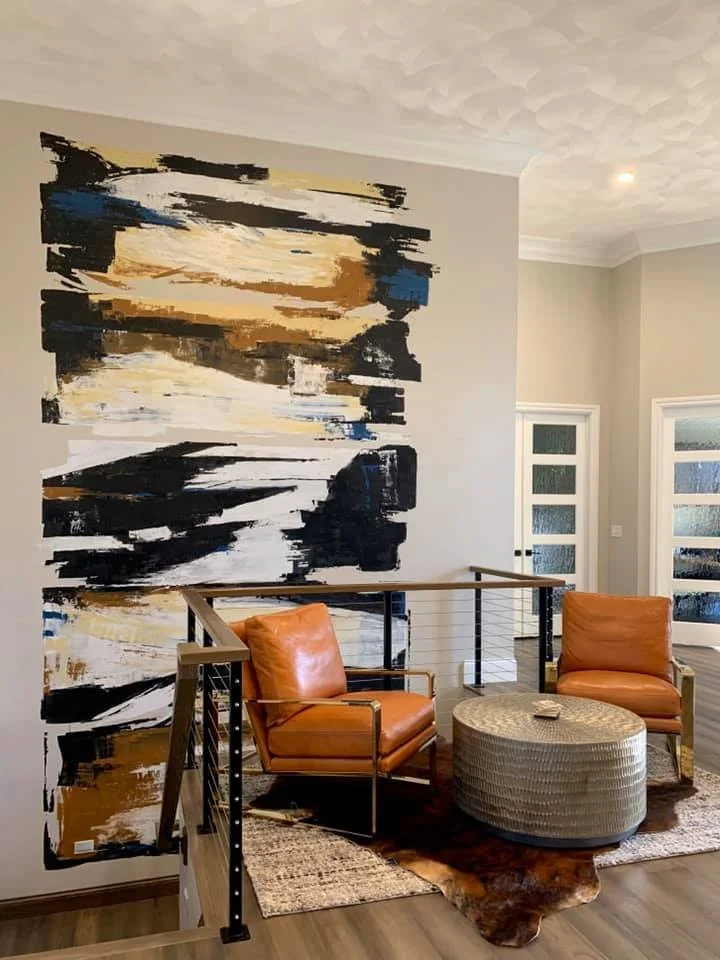
That mindset led her to study Housing and Environmental Design, a path under the interior design umbrella that gave her both creative training and a deeper understanding of how spaces actually function. What she found in school, though, was that design involved much more than surface-level beauty. There were electrical layouts, plumbing walls, technical plans, and construction knowledge that gave her a fuller understanding of what the work really required.
That education mattered, but experience mattered just as much.
Learning the Industry From the Inside
Right out of college, Melanie interned with Belleville designer Alan Brainerd,, a one-man show whose business gave her a crash course in the realities of the field. Working closely with him meant getting exposed to trade resources, hidden gems, fabrics, accessories, and the pace of real design work in a way that school simply could not replicate.
From there, her career continued to evolve through multiple roles that each gave her something different. She gained experience in facilities planning, worked with a designer focused on assisted and independent living spaces, and later moved into high-end residential design in Clayton.
Each chapter added another layer. It was not just about refining taste. It was about understanding people, process, structure, and how different environments demanded different kinds of thinking.
One of the more unexpected gifts of those early years was how much she learned from clients themselves. In Clayton, for example, many of the people she worked with were Jewish families, and those projects introduced her to customs and considerations she had never encountered before, from kosher kitchens to the ways culture and religion shape the use of space.
For Melanie, that kind of learning became part of the appeal. Design was never only about selecting finishes. It was about understanding people.
The Chapter That Changed Everything
One of the most defining periods of Melanie’s career came when she joined The Pyramid Companies, a developer involved in loft projects in St. Louis.
For someone who loved old buildings, history, and transformation, it was the kind of role that felt almost made for her.
She worked in spaces that had sat abandoned for years, buildings with warped floors, crumbling interiors, visible signs of past lives, and all the messiness that comes with bringing something back to life. She collaborated closely with architects, construction teams, developers, and real estate professionals, all under one umbrella. She helped buyers through selections, designed common areas and displays, and became a key part of turning neglected structures into vibrant living spaces.
It was immersive, challenging, and deeply satisfying. She loved not only the design itself, but the preservation of history within it.
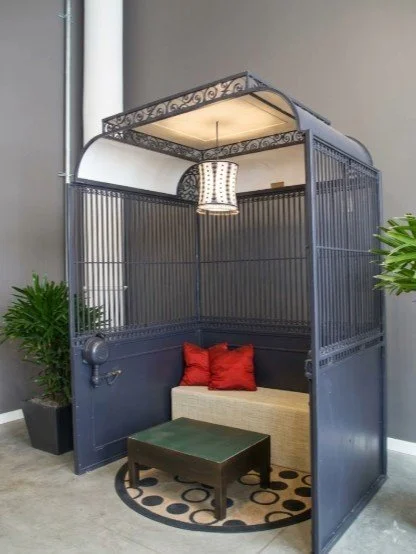
That instinct to protect what matters showed up in memorable ways. In one loft building, she fought to save an old iron elevator cage that others were ready to destroy. She pushed until it was preserved instead and ultimately incorporated into the building’s lobby as a seating area.
That moment says a lot about how she sees design. She is not interested only in replacing things. She values character, story, and the elements worth carrying forward.
But like so many careers touched by the 2008 market collapse, that chapter did not last.
As the market unraveled, the company began letting people go in waves. Week after week, the uncertainty grew. Eventually Melanie and her boss were among the last ones left, holding keys to a company that was essentially crumbling around them. When they finally walked away, there was no one even there to hand the keys to.
It was the end of a chapter she had loved. But it was not the end of her momentum.
Building Toward Something of Her Own
After the loft years, Melanie moved into the plumbing industry, first working with a supplier she had connected with through prior design work, then later with another company that recruited her to help launch a finishes division. It may have looked like a detour from the outside, but it gave her another valuable niche and broadened her expertise even more.
By then, she knew she wanted something else too.
She wanted to build her own design business.
Still, she was practical about the timing. Dave was self-employed, and walking away from a good paycheck and benefits was not something to take lightly. So instead of making a dramatic leap too early, Melanie negotiated a setup that allowed her to start her company while still working reduced hours in her other role.
She built Holden Design Group in the margins first, working constantly, staying up late, pushing through long days, and using every bit of time she had.
Then life shifted again.

The True Turning Point Into Adulthood
When Melanie reflected more deeply on the original question of what truly marked her transition into adulthood, her answer became clear.
“It has to be when I had Milo,” she said, “even though I was 38 years old.”
That was the moment everything changed.
Having her son reshaped not only her priorities, but the structure of her whole life. She knew he would likely be their only child, and she wanted more flexibility than her current setup allowed. At the same time, the idea of stepping away from a secure job with benefits and health insurance felt significant, especially with a new baby and a young family depending on that decision.
“Taking on the responsibility of a new baby and a new business at the same time definitely made me feel more adult than I’d ever felt up to that point.”
That is the real hinge in Melanie’s story.
Not because success suddenly appeared, but because she made a choice that required courage, trust, and a willingness to build a life that aligned with what mattered most. It was not reckless. It was thoughtful. It was considered. And it was supported by the partnership she had built with Dave, whom she describes as an amazing support and an integral part of the “group” in Holden Design Group.
When she chose to go all in, she did it with both feet in real life: a baby, a business, a household, financial realities, and the hope that she could create something sustainable on her own terms.
She has not looked back.
Motherhood, Work, and the Myth of Perfect Balance
Starting a business and becoming a mother at the same time might sound overwhelming, but Melanie describes that season with more nuance than panic.
She was ready.
She had energy for it because she felt energized by both parts of her life: a long-awaited child and a business that finally belonged to her.
“Every dollar I make is for me,” she said, describing the motivation of that time.
Her mother helped care for Milo a few days a week, giving her space to work, and in those early days, she found a rhythm that worked. He was a good baby. She could lay him on a blanket nearby while she worked through kitchen plans and design details. It was not effortless, but it was manageable.
As he got older, that balance changed. Like many women, she learned that balance is not a fixed equation.
There’s no 50-50 balance. “It’s about the balance that feels right at that moment in time”, she said.
That may be one of the strongest truths in her story. She does not present midlife as a polished formula. She talks about it as something you learn by living it, by making decisions as circumstances change, by knowing that one area may need more of you in one chapter and another area in the next.
Confidence Looks Different Now
Now at 50, Melanie says one of the biggest shifts has been confidence.
Not the loud kind. Not the performative kind. The earned kind.
She has become much more comfortable recognizing when a client or project is not the right fit. Early in business, many women feel pressure to say yes to everything out of fear that turning something down will hurt them. Melanie has moved beyond that.
She now knows that saying no can actually protect the quality of her work and create room for the projects that align best with her strengths, schedule, and well-being.
That same perspective showed up clearly in the advice she would give her younger self.
“Start saving and investing immediately, because time flies when you’re living life, and you’ll be looking toward your retirement years before you know it.”
And just as importantly:
“Take risks and step out of your comfort zone, but understand not every opportunity is meant to be taken. It’s okay to graciously say no when a project or opportunity is not a good fit. This allows the capacity for the things that best suit your time, goals, capacity, and well-being.”
That is the kind of advice that only comes from time. It holds both ambition and discernment at once.
What Makes Her Work Different
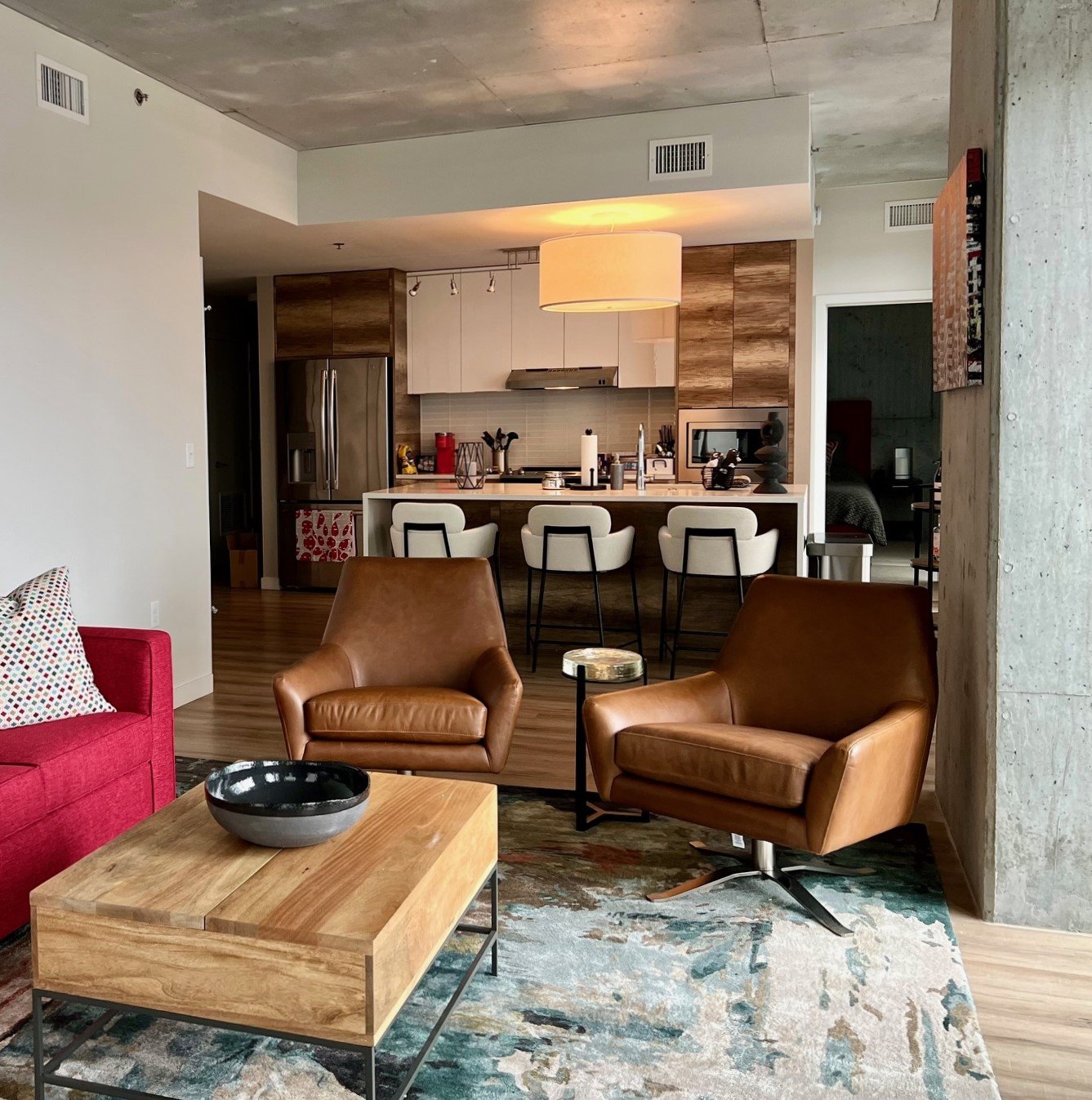
Ask Melanie what she loves most about design, and the answer is not limited to one category. She loves kitchens and baths for the space planning and technical puzzle they present. She loves the luxury of a furniture-only project, where every fabric and finish can be selected with intention. She loves new construction for the blank slate. She loves remodels for the challenge and creativity they require. And she especially loves historic homes and spaces with soul.
What ties all of it together is her approach.
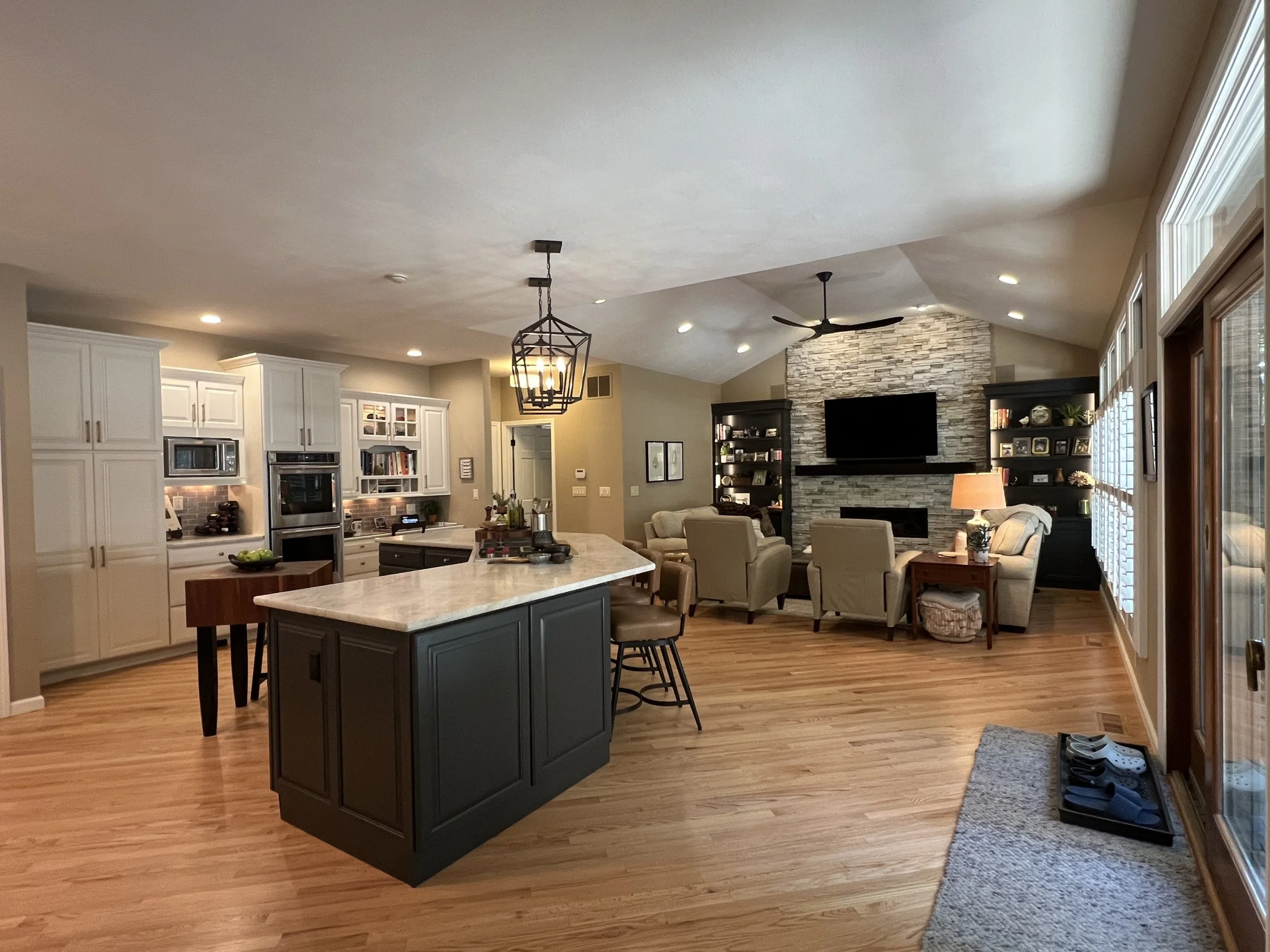
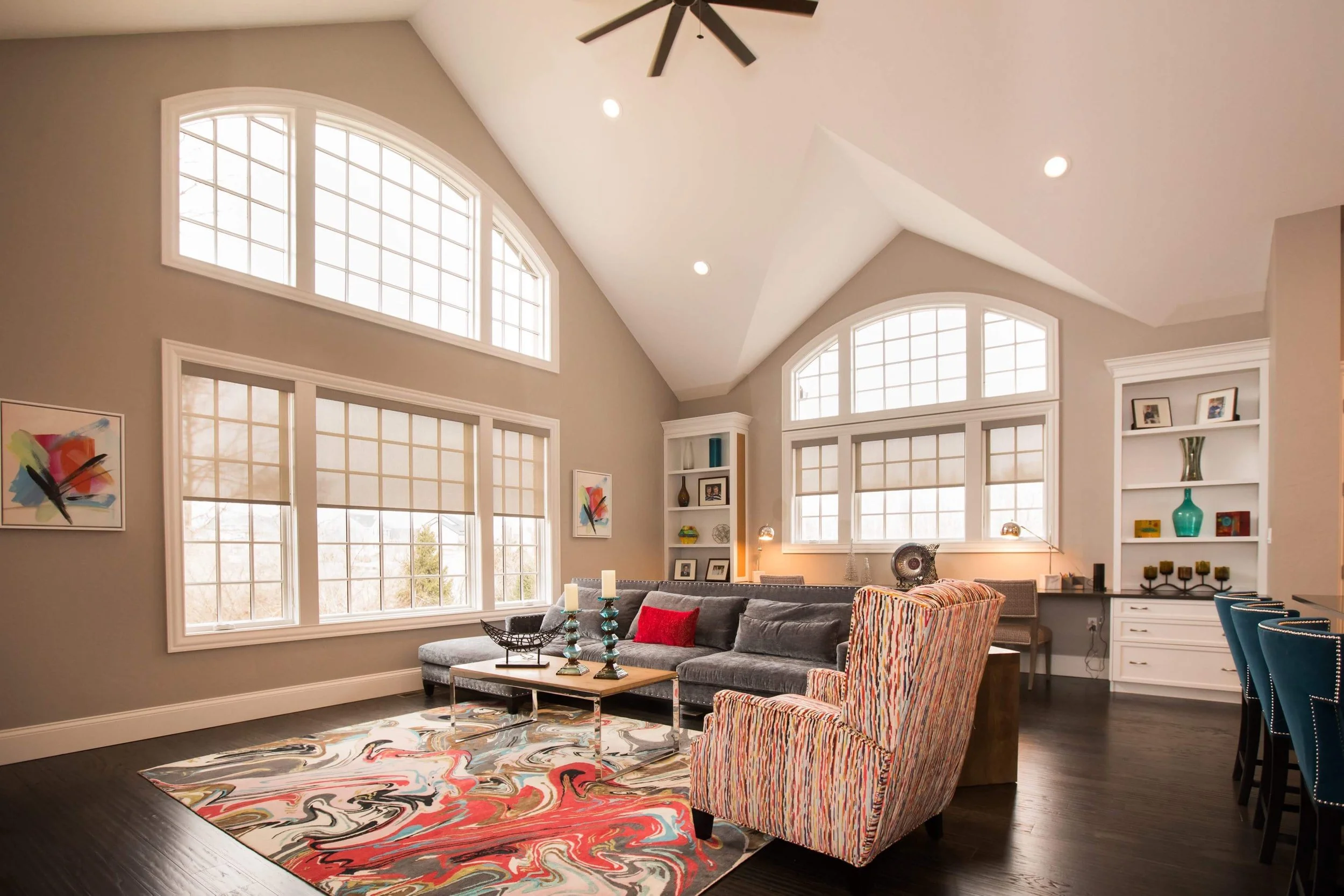
She is not interested in imposing a signature look just for the sake of it. She wants a home to feel right for the people living in it.
“A lot of designers can come in and say, this is the style you’re doing,” she said. “Whereas I like to look at it as you’re the one living here, and I want to make this your sanctuary. If you don’t love it, then I fail. It doesn’t matter how much I love it.”
That mindset likely explains a lot about why clients trust her. Her work is personal without being overbearing, skilled without feeling rigid, and elevated without losing sight of the people actually living in the space.
It also reflects the broader maturity of her midlife perspective. She no longer needs to prove herself through control. She can create from confidence instead.
Midlife, Strength, and Adapting As You Go
Outside of work, Melanie’s life also reflects the kind of adaptability that defines so much of midlife.
Though she had always been a runner, she found CrossFit in her early 40s after a spontaneous workout at a BNI meeting left her unexpectedly hooked. The challenge reminded her of earlier athletic experiences and opened the door to a new phase of strength and fitness. Now she works out regularly, while also giving herself more rest than she might have years ago.
That shift matters too. Midlife often asks women to pay attention in new ways, to energy, recovery, hormones, sleep, and physical capacity.
Melanie has been open about using hormone replacement therapy and navigating the realities that come with aging in a woman’s body. But what stands out most is not any one solution. It is her willingness to adjust, to pay attention, and to stay responsive to what her body and life need now.
That same willingness shows up in her view of the future.
She sees herself continuing Holden Design Group in some capacity for as long as she can. She loves to travel and plans to keep doing that, and she is grateful for the technology that allows her to stay connected to her work even across distance and time zones.
It is a future that sounds less like slowing down and more like shaping life with intention.

What She Wants Other Women to Know
When asked what she would want other women entering midlife to know, Melanie did not offer something polished or overly idealistic. Instead, she offered something better: realism with perspective.
“There will always be bumps in the road. Life is unpredictable, and perfect planning will rarely result in flawless execution.”
For a designer, those bumps might look like backorders, damaged items, or a long-awaited chair falling off a cargo ship on its way from Italy. But the metaphor reaches beyond design.
Midlife itself often comes with delays, pivots, disappointments, reroutes, and plans that do not unfold as expected.
“It helps to stay flexible and anticipate where the possible road bumps may arise,” she said. “Sometimes when you have to pivot, you can end up with a result that is even better than the original plan.”
That idea may be the truest summary of her story.
Because Melanie Holden’s life does not read like a story of flawless execution. It reads like something better: a life built with talent, effort, adaptability, and the growing wisdom to know when to hold on, when to change course, and when to trust that the pivot may lead somewhere even better.

Melanie Holden, LEED® AP ID+C
Holden Design Group
618.530.1046
✨GlowInto Reflection✨
There is a difference between making something look beautiful and making something truly fit. Melanie’s story suggests that the same may be true of life.
Over time, she learned that success is not about saying yes to everything, forcing perfect plans, or holding every piece in place at once. I
t is about knowing what matters, staying flexible when life shifts, and creating room for what supports both ambition and well-being. In many ways, that is what midlife asks of women most — not perfection, but a better fit.
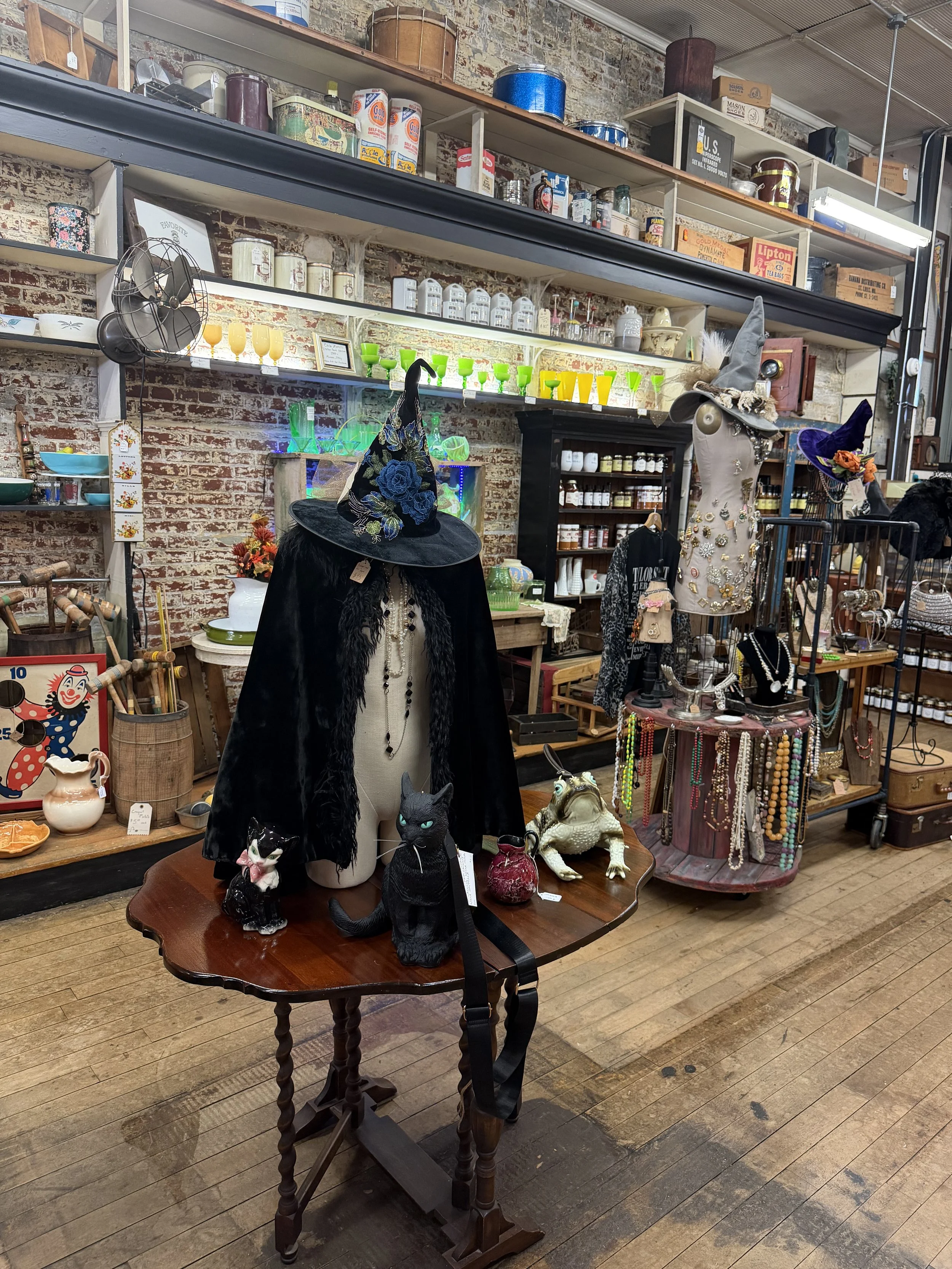


Great style doesn’t have to mean buying everything brand new. Karlyn Slaydon of KS Signature shares why resale, vintage and consignment deserve a place in your closet—and how shopping more thoughtfully can help you find better-quality pieces, stretch your wardrobe budget, support your community and give great clothes another life.