
Lorna Gaffney: The Youngest Interview With an Old-Soul Kind of Wisdom
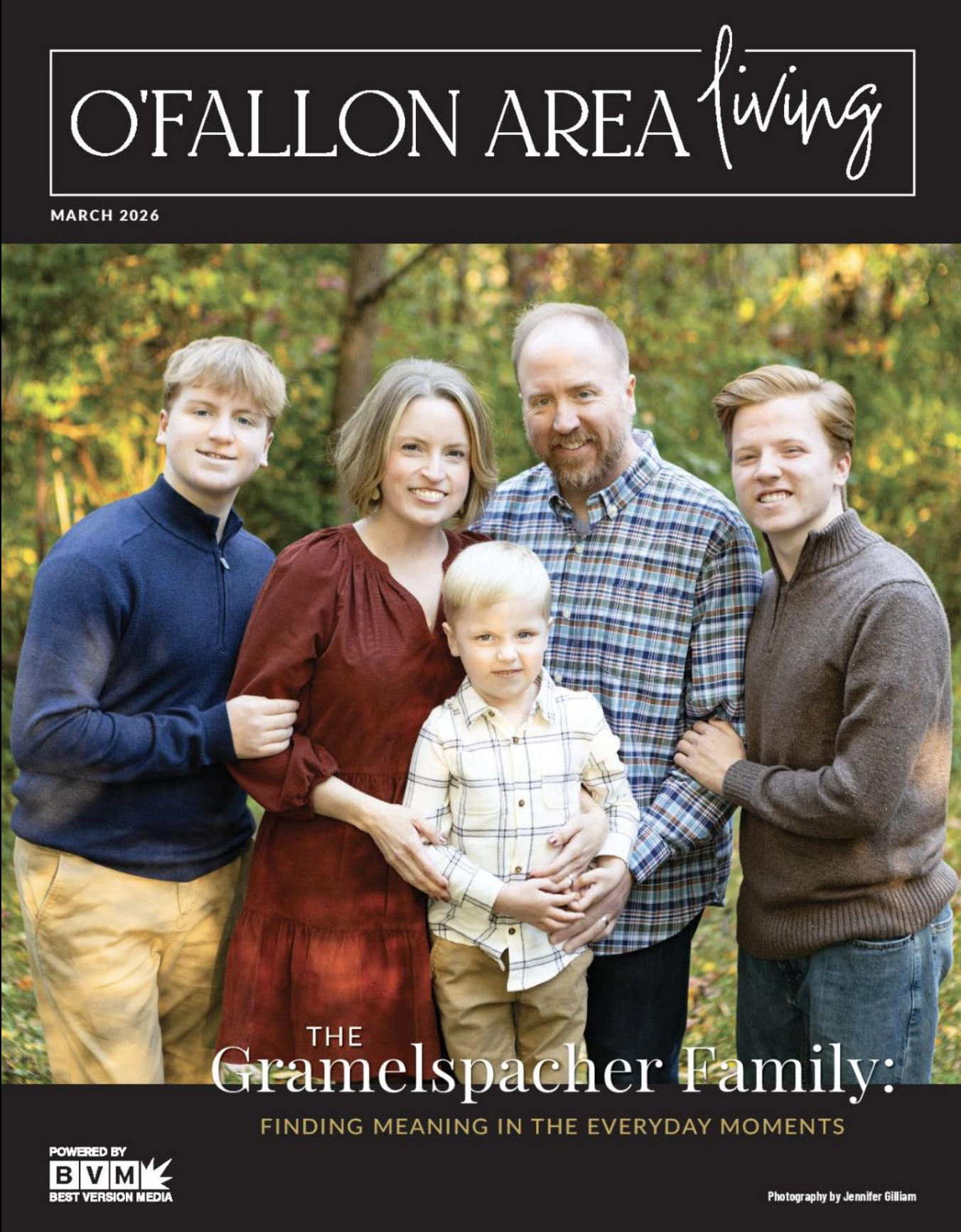
Check out O’fallon Area Living Magazine-Glow Into is a featured article monthly. Lorna’s story will be out in the April 2026 issue.
Age 39-Greenville,IL
Lorna is turning 40 this year which makes her the youngest woman I’ve interviewed so far for GlowInto — and I’ll be honest: her quiet confidence caught me off guard in the best way.
Some people don’t really begin reflecting until their 50s, when life forces the pause. Lorna has already done that inner work — not in a “perfectly figured out” way, but in a steady, honest way. She seems to know herself. She knows what she believes. She’s compassionate without being naïve. And she holds the future with a certain kind of openness that feels like early midlife wisdom.
The kind that comes from paying attention.
✨Her First Turning Point: Homeownership, a New Job, and a New Town — All at Once
When I ask women where their “adult story” begins, many start with marriage or motherhood. Others begin with career, caretaking, or a moment where life asks them to stand on their own in a new way.
Lorna’s path hasn’t included marriage or motherhood, and her first major adult milestone came through a different kind of leap — one that arrived early and all at once. She bought a home, landed her first non-temp post-college job outside restaurants, and moved to a new town — all in the same season of life.
She was 23, and the job itself came through a surprising route: Craigslist. It was a digital media position for a marching band uniform manufacturer, and marching band had been a meaningful part of her high school identity. Even then, she admits she didn’t feel fully qualified. She just knew she wanted out of survival jobs — and she wanted a life that felt like it matched her degree, her potential, and her values.
What struck me most is what she did next: her employers told her she didn’t have to move, that she could commute from St. Louis. But Lorna didn’t want her life to be split — work in one place, community in another. So she moved. She chose proximity. She chose belonging. She chose to build a life where she actually lived.
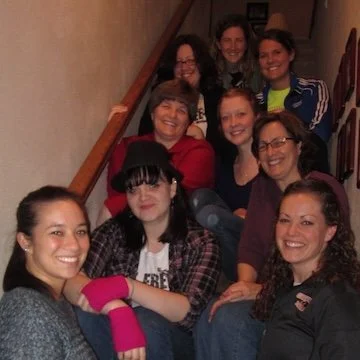
Group on stairs: early days of community awareness circa 2012. Set Free: Bond County (the precursor to Eden’s Glory)
“I was 23 and I bought a house… and became a homeowner on my own.”
✨Faith, Upbringing, and the “Why” Behind Her Compassion
Lorna’s faith isn’t a side note in her story — it’s part of how she’s learned to interpret the world, love people well, and keep doing difficult work without shutting down emotionally.
She was raised in the church — United Methodist, specifically — in an environment where faith wasn’t just something you “had,” it was something you practiced. What she carried from her upbringing wasn’t only belief, but a value system: invest in your community, help others, and stay aware of the needs around you.
That foundation matters, because it shows up later in her life in a way that feels consistent, not performative. You can draw a straight line from her early formation to the kind of work she’s doing now — the kind that requires endurance, empathy, and a belief that people are worth fighting for even when their stories are complicated.
Like many women, her faith journey wasn’t a straight line. In college, she drifted — not necessarily out of rejection, but because she didn’t find a church home that felt like a real community. And without community, even strong foundations can start to feel quiet.
When she moved to Greenville, that changed.
Greenville has its own rhythm — it’s a smaller town with a Christian university presence, and church life is woven into the culture in a way that made it easier for her to reconnect. But what brought her back wasn’t pressure or perfection. It was belonging. It was relationships. It was the feeling of being known again.
And from that space, her faith became less about “what I believe” and more about “how I live.”
“It’s really my faith that helps me in those weaker moments.”
✨The Move: From St. Louis Life to Small-Town Living
Moving from the St. Louis area to Greenville at 23 wasn’t just a logistical shift — it was a cultural one.
Lorna described those first years as a real adjustment. Small-town culture has its own language, its own pace, its own unspoken rules. And even now — after nearly 16 years — there are moments where she still notices the difference.
But what’s interesting is that the very thing that once felt like a challenge eventually became part of what she loves: the ability to be many things in one life.
In larger cities, you can feel like you have to specialize, compete, and be “the best” at one thing to be seen. In a small town, there’s often more room to participate, to stretch, to try roles you’ve never tried before — and to become a bigger version of yourself because your community actually needs what you can offer.

Lorna put it simply: she enjoys being a Renaissance woman.
Not because she’s scattered — but because she’s whole.
And the location helps. Greenville keeps her grounded, but she’s also close enough to St. Louis to still get her city fix and stay connected to her parents, who live back in the St. Louis area.
That balance matters.
“It’d be a lot harder to be both a small-town girl and a city girl if I was further away from a city.”
✨How Anti-Trafficking Work Entered the Story
One of the most moving parts of Lorna’s story is how her purpose didn’t arrive through a master plan. It arrived through a conversation — and then another conversation — and then a small group of people paying attention.
After she found community through church (and the young adult group that came with it), she met a woman connected to anti-trafficking work. What began as curiosity turned into a gathering — a handful of people meeting at a table, asking what trafficking could look like in their own community.
They were volunteers at first. Faith-driven. Learning as they went.
They held film nights, hosted education events, and created opportunities for people to understand what trafficking looks like — because one of the hardest truths is this:
It doesn’t always look like what people imagine.
It exists everywhere. It just wears different disguises depending on the area.
Then came the moment that took the group from “awareness” to “what if we actually build something?”
A leader in the movement told them they had what many communities don’t: a location and a network that could support a safe home for survivors.
And in 2015, Eden’s Glory opened its doors — but the seed had been planted years earlier, around that first table in 2013.
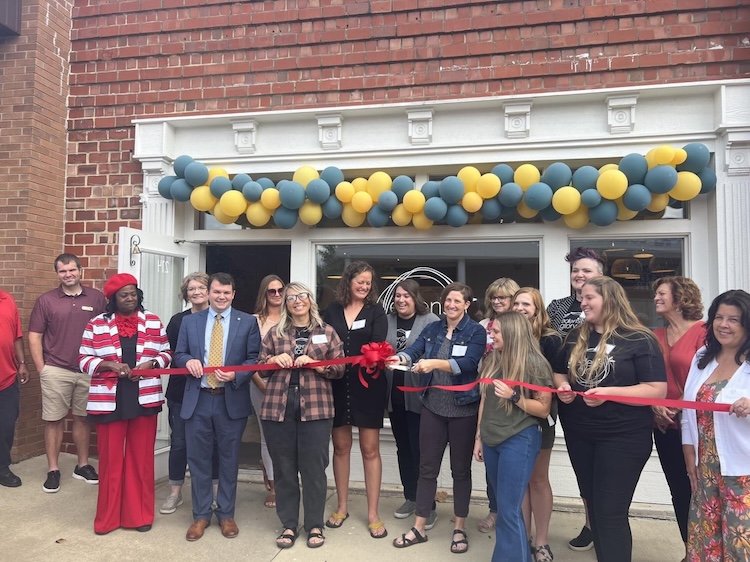
Ribbon cutting: new Eden’s Glory office, Fall 2024 EG staff and key stakeholders
✨Why This Cause Resonated With Her: The Consumer Connection
When I asked what about trafficking resonated most, Lorna’s answer landed in a way that doesn’t let you stay detached.
She talked about labor trafficking, specifically — and how it touches everyday life through the choices we make as consumers. It made her look at money differently. It made her think differently about what she was buying, where things come from, and who might be exploited behind the scenes.
It was compelling because it wasn’t theoretical. It was personal.
She connected it to something many people quietly carry: overspending, debt, trying to fill a void, and eventually realizing you want your life to match your values. For her, anti-trafficking work became a place where redemption and justice weren’t abstract ideas — they were choices you could make one day at a time.
“It impacts every single decision we make as consumers.”
✨Eden’s Glory: Prevention and Restoration
Lorna explains anti-trafficking work in three broad areas: prevention, rescue, and restoration. Eden’s Glory focuses on two of those — prevention and restoration — “bookending” the work.
Prevention
Eden’s Glory partners with communities and organizations to help people understand:
what trafficking can look like,
what to do when they suspect it,
and how to reduce risk.
They’ve educated hospitals, law enforcement, schools, attorneys, business groups, and more — and one topic they’re leaning into heavily right now is internet safety, helping caregivers and children navigate online spaces with more wisdom and protection.
Restoration
Eden’s Glory works directly with survivors:
A minors program (ages 5–17) where children come weekly for trauma-informed therapy — with support offered to their families, too.
A two-year residential program for adult female survivors:
Year one: deep healing, structure, classes, stability, and a family environment
Year two: continued healing plus launching into independence — including life skills, GED support, and even learning to drive for those who never had the chance.
One of Eden’s Glory’s core pillars is radical hospitality — not in a surface-level way, but as a statement of dignity: you matter here.
“Surrounded with radical hospitality is one of our big pillars.”
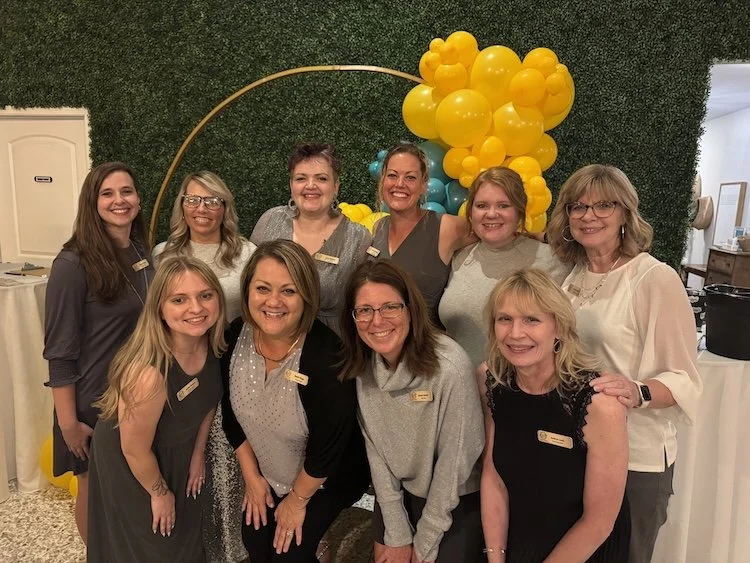
Group with balloons in background: celebrating 10 years of Eden’s Glory, September 2025 - EG Staff
✨“They Are You and Me”: How the Work Has Changed Her
Lorna’s compassion is not vague. It’s earned.
When she talked about meeting survivors, she emphasized something people often miss: survivors aren’t “other.” They aren’t easily identified. They aren’t a stereotype.
“They are you and me.”
That truth has shaped how she moves through the world. It has made grace easier. It has made her more aware that behavior is often a clue — not a reason to judge.
She also shared honestly that doing this work can affect trust. Seeing what people are capable of — and how normalized certain cultural messages have become — changes what you can tolerate. She spoke about being in counseling and believing most people could benefit from it, because everyone carries something.
And she mentioned the way her work has made her more sensitive to hyper-sexualization in culture — lyrics, movies, media — not from a place of fear, but from a desire to stay aligned and not become numb to things she’s spent years fighting against.
“You never know someone’s story… and it makes it easier to love the people around you.”
✨Theater, Band, and the Joy That Keeps Her Whole
If Eden’s Glory is the work that grounds Lorna, theater and music are part of what keeps her alive.
She has always loved musicals — from the golden era of film to that prime 90s Disney stretch where it felt like every story came with music. She studied video production and music performance, and for years she was “behind the scenes” in pit orchestra — supporting the stage from the music stand.
Then Greenville introduced her to a new possibility: what if she tried the stage?
She joined The Factory Theatre and once the theater bug hit, it stuck. She’s now been involved in 12 productions in various roles — acting, co-directing, prop work, set dressing, and board leadership.
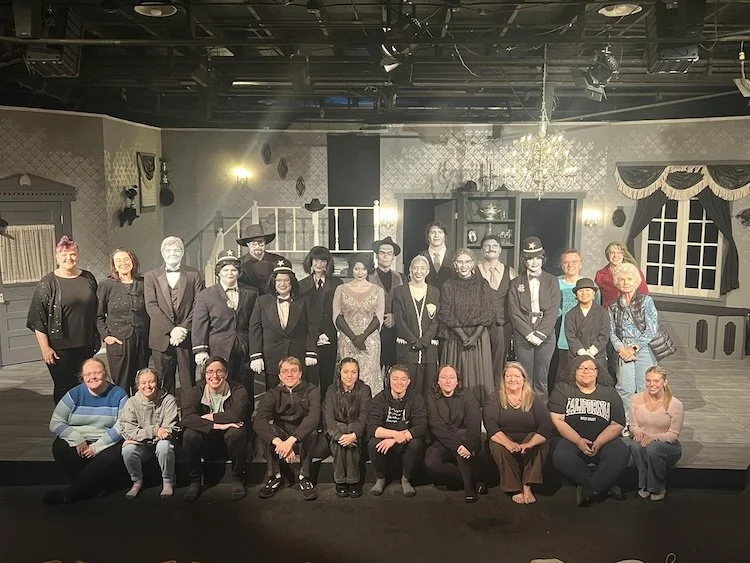
Mostly gray people: Cast & Crew of The Factory Theatre’s completely grayscale production of ‘Arsenic & Old Lace’. November 2025. I was co-director.

Cast of The Factory Theatre’s production of ‘The Drowsy Chaperone’. I am the one in purple (Mrs. Tottendale). April 2025.
Right now she’s in Once Upon a Mattress, playing a villain for the first time — a queen, no less — complete with the kind of costume moment that reminds you adulthood doesn’t have to mean becoming less playful.

✨Early Midlife Wisdom: What She’d Tell Her Younger Self
When I asked what she would tell her younger self, her answer was simple, steady, and powerful.
“You’re strong. You’re capable.
And you don’t have to build your life around the idea that you need a man to be complete.”
She’s open to love. Open to marriage. But not from a place of panic. Not from a place of lack. And there’s something very midlife about that — not because it’s cynical, but because it’s rooted.
✨Looking Toward Midlife Years: Health, Hope, and the Reality of Aging Parents
Lorna admitted she’s never been great at the “ten-year plan” question — and honestly, that might be part of her wisdom. She holds the future loosely, because life has already proven it doesn’t always follow the script.
But she did name what she hopes for:
becoming a healthier version of herself with more consistent movement,
possibly marriage if the right partnership comes along,
and the midlife reality she feels most tender about: navigating aging parents and eventual loss — especially as an only child.
It’s the part of midlife no one glamorizes. But it’s real. And it’s coming for all of us in one form or another.
Eden's Glory: edensglory.org
The Factory Theatre: facebook.com/GUfactorytheatre
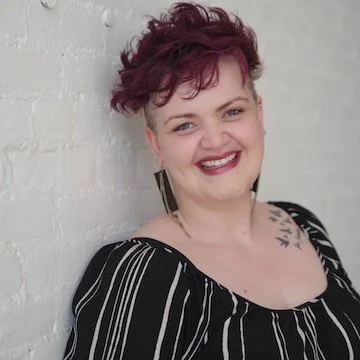
GlowInto Editor’s Reflection
Lorna’s story widens the definition of midlife. At 39, she moves through life with a grounded self-awareness that many women spend years trying to reclaim — the kind built through reflection, lived faith, and a quiet commitment to growth. Her faith is practical, not performative; it shows up in the way she serves, the way she processes, and the way she stays tender in heavy work. And alongside that calling, she keeps a door open for creativity — theater, music, and play — because joy isn’t extra. It’s part of what keeps a woman whole.
That combination — purpose and joy — is its own kind of strength.
And that’s what GlowInto is here to spotlight: women becoming more fully themselves, one brave chapter at a time.
Stop by Blanquart’s Vintage Market In Downtown Belleville for unique gifts and treasures for your home.
