
Employers & Employees: The Great Divide
I had the opportunity to attend a meeting with small and mid-size businesses owners. Each owner introduced themselves and talked a little bit about what products are services the company offered. They expressed any needs the company may have whether it was best practices or suggestions. By the time we got around to the last company, I noted a common thread amongst them, the lack of manpower.
Some of the comments were:
“I can’t find anyone with a driver’s license.”
“Where are the quality candidates?”
“Do people really want to work?”
From a business aspect these are all fair questions. But there are two sides to every coin. All angles must be addressed before one concludes that any of these comments are valid.
Fast forward, two days later, I’m in a meeting with job seekers. One job seeker, really held my attention. I could tell that they were very educated and well-spoken. In a very frustrated tone, they said, “I have put in 200 applications, but I never hear anything back from the employers.” They went on to say, “whose hiring and how do you get hired?”

In that moment I realized that there is a great divide between job seekers and employers. Both meetings were held just a few miles from each other. So, in retrospect, they are both from the same neighborhood, but they are not on the same street.
This is where I address both sides of the coin. Employers, if you are looking for candidates that need to have specific criteria you need to be more strategic in sourcing them. For instance, if the candidates need to have a driver’s license instead of just posting the job on Indeed, why don’t you set up a “direct hiring fair” at the local DMV.
Now candidates…hear this, sometimes the application process is very lengthy which tugs on your “patience.” Believe me, as a middle-aged woman, I know what it’s like to be a candidate in waiting. I know what it’s like to put in 50 applications only to have employer #2 send a regret letter 6 months later after you forgot you even applied for the job. The job market is not what it used to be.
You must be intentional with your salary request. Make sure it matches your “actual” skill set. Make it make sense…LOL. Understanding if your light on the skill side, your salary request should be at the starting rate.


Here are some tips I have for both employers and job seekers.
1. Employers review your job descriptions ensuring it pertains to that job. I generally suggest completing a job analysis every 2-3 years.
2. Companies conduct a market wage analysis. Make sure the wage is competitive.
3. Job seekers, ask recruiters how soon they are looking to fill the position. If they say 30 days but it’s been months since you’ve heard from them, move on.
4. Applicants review the job description thoroughly so that you can represent your best self.

There are some really great candidates and some really great companies out there. All parties must be realistic through the process. Let’s close the gap and get rid of the wall of confusion. Remember, a house divided cannot stand.

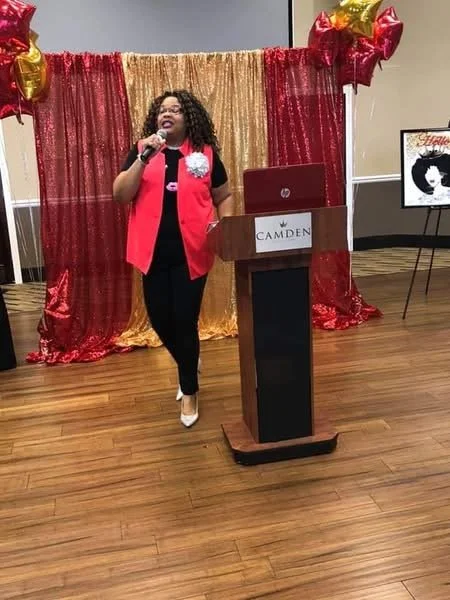
Meet Latonya Duncan, Founder and CEO of Latonya Renee Consulting and a new contributor to GlowInto's Inside the Workplace pillar.
Known as the "Chaos Coordinator," Latonya helps established women entrepreneurs simplify and streamline the behind-the-scenes of their businesses so they can grow without losing their sanity—or the personal touch their clients know and trust.
Before consulting, Latonya spent 17 years as a preschool teacher and later worked with the Parents as Teachers national center, supporting more than 200 programs across eight states. Today, she brings that experience in leadership, organization and supporting others to women in business.
Her philosophy is simple: most successful women don't need more ideas—they need structure that actually supports how they lead.
We're excited to welcome Latonya to GlowInto and Inside the Workplace.